
Best Tools for Creating Websites, Landing Pages, Courses, and Selling Digital Products
You’ve probably thought about this already. Build a website, create a simple page, maybe sell a course or digital product online without writing a single

Here is the truth. Many beginners get stuck because they think they must build a full website before they can sell anything. That belief slows them down. It makes them spend money they do not need to spend. It also delays the moment when they get their first customer.
The helpful thing is to understand that a landing page and a website are two different tools. Each tool has a different purpose. One is designed for fast action. The other is designed for long term growth.
Imagine you are a new creator with a single digital product. This could be a simple eBook or a small training. Or maybe you offer a service like editing, coaching, or design. You do not need a full website to start selling that offer. You only need a space where people can understand your offer and take action.
That space is a landing page. Let’s break everything down in a clear and friendly way so you can choose what works best for you.
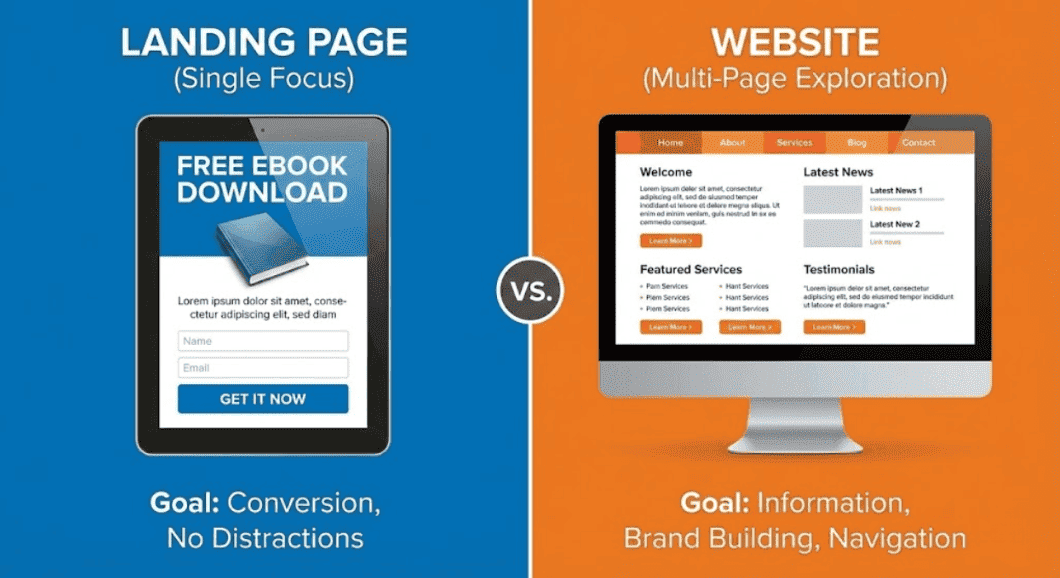
A landing page is a focused page with one single goal. It is simple. It is direct. It guides the visitor to do one clear action.
Imagine you want to sell a mini course on time management for freelancers. Your landing page would only show this one course. It would explain who the course helps.
It would show the benefits. It would include a button to buy. That is it. No menu. No extra pages. No long navigation.
Pro Tip: Keep one goal and remove all distractions. Do not ask people to do five things. Ask them to do one thing well.

A full website has many parts. Each part serves a different purpose. As your business grows you will need more than a single page.
These pages help you create a strong online presence. They also give visitors more information about who you are and why they can trust you.
Imagine a consultant who offers three types of services. They have coaching sessions, group workshops, and corporate training.
A single landing page would not be enough for that. They need separate pages to explain each offer. They need space for testimonials. They need a blog to show expertise.
Websites are better for long term business building. You do not need one to start, but you will need one when your business expands.

Let’s keep this simple and friendly. Most beginners do not need a full website right away. You only need a landing page when you are testing your idea.
If you are launching your first eBook, a landing page is enough. It shows the title, the benefits, and a buy button. You do not need multiple pages to explain one product.
A coach can use a landing page to collect leads. The page can include a short video, a simple explanation, and a button to book a call.
Maybe you want to test a new service before building a full brand. A landing page helps you see if people are interested without spending much money.
If you want to test an idea, start with a landing page. If you want to build a long term online presence, build a website.
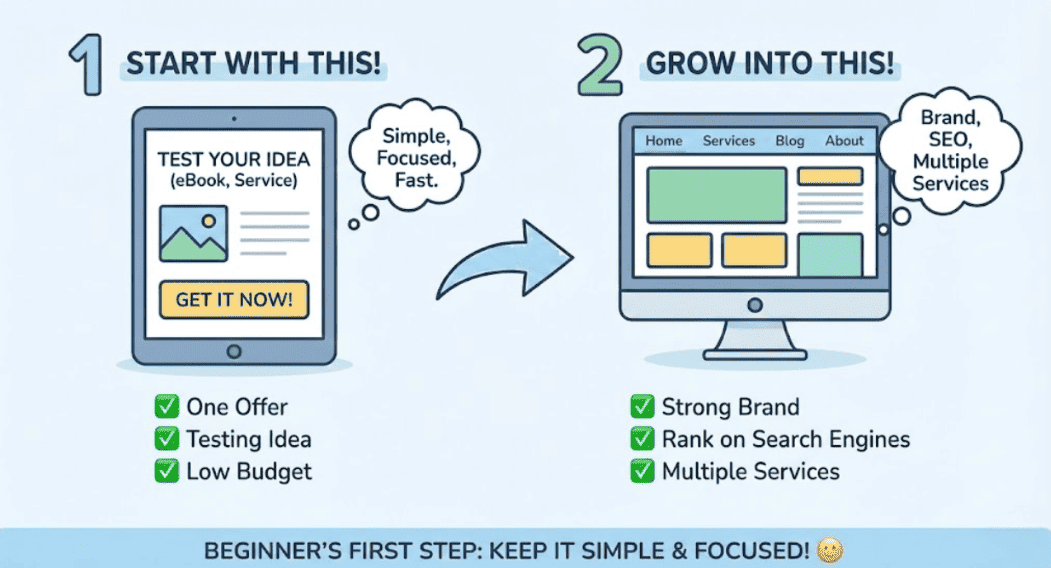
Let us compare the two in a simple and clear way.
Always test your offer on a landing page before investing in a full site.
If your budget is low, start with a landing page. It lets you learn the market without pressure.

Many successful businesses use both a website and landing pages. Each tool does something different and they work well together.
Visitors read your blog and learn about you on your website. Then they click to a landing page where they buy or sign up.
Imagine a fitness coach. They use a website to share blog posts, tips, and success stories. This builds trust. But when they launch a new workout program, they use a landing page. The landing page focuses only on that one program and helps people enroll easily.
When you combine both tools your business grows faster. You build authority and you increase conversions.

Starting an online business does not need to feel overwhelming. You do not need a full website to begin. You can start small and grow at your own pace.
A landing page helps you launch faster. A website helps you build trust over time. Both are useful. The key is choosing the right one for your stage of business.
Remember this. Your business grows when you start, not when you wait for perfection.
And one more thing. You can always begin simple and build more once you have results.
If you keep taking small steps, you will move forward faster than you think.
You’ve probably thought about this already. Build a website, create a simple page, maybe sell a course or digital product online without writing a single

Most business owners look at their profit and loss statement only when tax season rolls around or when their accountant asks for it. I understand
If you run a business, people will look you up. They do it before they call. They do it before they buy. They do it