You’ve probably thought about this already. Build a website, create a simple page, maybe sell a course or digital product online without writing a single

When I started my business, I used to think I had to figure everything out alone. But reading changed everything. It gave me direction. It gave me momentum. And more importantly, it helped me avoid costly mistakes.
This guide gives you the best entrepreneur books for each stage of your business journey, all explained in simple language with real examples, key lessons, and actionable takeaways.

Before you talk about sales, marketing, or scaling, you need a mindset. Your mindset is the foundation. Without it, nothing else stands. Every successful entrepreneur starts by reshaping their thinking.

Core Idea:
Your beliefs, thoughts, and actions shape your financial reality.
A new entrepreneur can apply it by writing a clear goal like:
“I want to earn $5,000 per month from my business within 1 year.”
Then commit to daily habits aligned with that goal.
This book reads like a story, not a textbook. It teaches how businesses fail due to bottlenecks, not effort.
Simple Explanation:
A bottleneck is the one step that slows everything else down.
Example:
You may be excellent at marketing but bad at delivery. That delivery weakness becomes your bottleneck.
Story Tone:
The book follows a struggling manager who must save his factory. He discovers that fixing the right bottleneck increases profits instantly. The same applies to entrepreneurs: fix the biggest constraint, not everything at once.
This book teaches the habit loop:
Entrepreneurs can use this to develop powerful daily habits.
Practical Example:
If your cue is sitting at your desk each morning, your routine becomes planning your top 3 tasks, and your reward is a small treat, a walk, or the satisfaction of a clear plan.
Takeaway:
Build habits, and habits will build your business.
Sales are the lifeline of every business. If you don’t know how to sell, your business will struggle. These books help you master persuasion, communication, confidence, and value delivery.

This book is pure energy. It teaches one idea: Think bigger and take massive action.
Grant Cardone says:
“Set targets that are 10X what you think you want and take actions that are 10X what you think are necessary.”
It pushes you beyond average effort and average results.
Application:
If your goal is 10 clients, think 100.
If your plan is 1 hour of work, make it 10.
This classic focuses on discipline and personal growth through the “scrolls.”
Inspirational Quote:
“I will persist until I succeed.”
Application:
Read one scroll three times a day for 30 days. It builds discipline and confidence; key traits in sales.
This is one of the most practical sales books ever written.
Takeaway:
People buy from people they like and trust.
Understanding people helps you sell better, market better, and communicate better. Even small shop owners use psychology daily without realizing it.

A timeless guide to people skills.
This book explains the most powerful persuasion principles:
Entrepreneurs can use them in marketing, sales pages, product launches, and content creation.
This book shows how confidence creates sales.
Key Point:
People buy your confidence before they buy your product.
Example:
If you believe in your service 100%, your client will feel it.
Leadership matters even for a one-person business. You’re leading your time, your energy, your goals, and your future team.

Focus on purpose-driven leadership. People don’t buy what you do. They buy why you do it. Knowing your “why” helps you inspire others.
Gary shares practical advice about:
He keeps it real, raw, and practical.
This book teaches elite mental toughness.
Core Ideas
It’s intense but incredibly powerful.

The GTD method helps you clear your mind and work stress-free.
Benefit:
You stay focused and avoid overwhelm.
Explains fixed mindset vs. growth mindset.
This shift changes everything.
This book is full of short, powerful lessons.

The world is noisy. Your business must stand out. This book teaches you to become “remarkable.”
Explains disruptive innovation in simple terms.
Simple Explanation:
Small, innovative ideas can beat giant companies because they move faster.
One of the best business-building books ever.
Core Idea:
Most entrepreneurs work in their business.
But successful ones work on their business.

Teaches shared leadership: empowering your team to make decisions.
Helps you discover your natural strengths so you can build a career around them.
Explains how to build authority online. Perfect for content creators, coaches, and influencers.

Helps you make better decisions.
Real, raw stories about running a company.
Teaches you how to build something new, not copy others.

Teaches investor mindset and asset building.
The best book on long-term investing.
Perfect for complete beginners.
Explains LLCs in simple language.
Teaches legal tax-saving strategies.
Shows how entrepreneurs can avoid unnecessary tax mistakes.
Entrepreneurs grow faster when they learn faster. These books guide you through mindset, leadership, sales, psychology, finance, productivity, and innovation.
You don’t need to read them all at once. Just pick one based on where you are right now in your business journey.
The right book at the right time can save you years. Keep learning. Keep growing. Keep moving forward. Your next chapter begins with your next book.

You’ve probably thought about this already. Build a website, create a simple page, maybe sell a course or digital product online without writing a single

Most business owners look at their profit and loss statement only when tax season rolls around or when their accountant asks for it. I understand
If you run a business, people will look you up. They do it before they call. They do it before they buy. They do it

Entrepreneurship is often portrayed as action-driven. Build faster. Launch sooner. Execute relentlessly. While action is essential, action without informed thinking often leads to unnecessary mistakes.

Marketing is often one of the most intimidating parts of starting an online business. New founders are quickly exposed to complex strategies, unfamiliar terminology, and
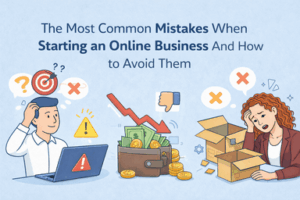
Starting an online business often feels like stepping into a world of limitless opportunity. The barriers to entry appear low, the tools are widely available,