
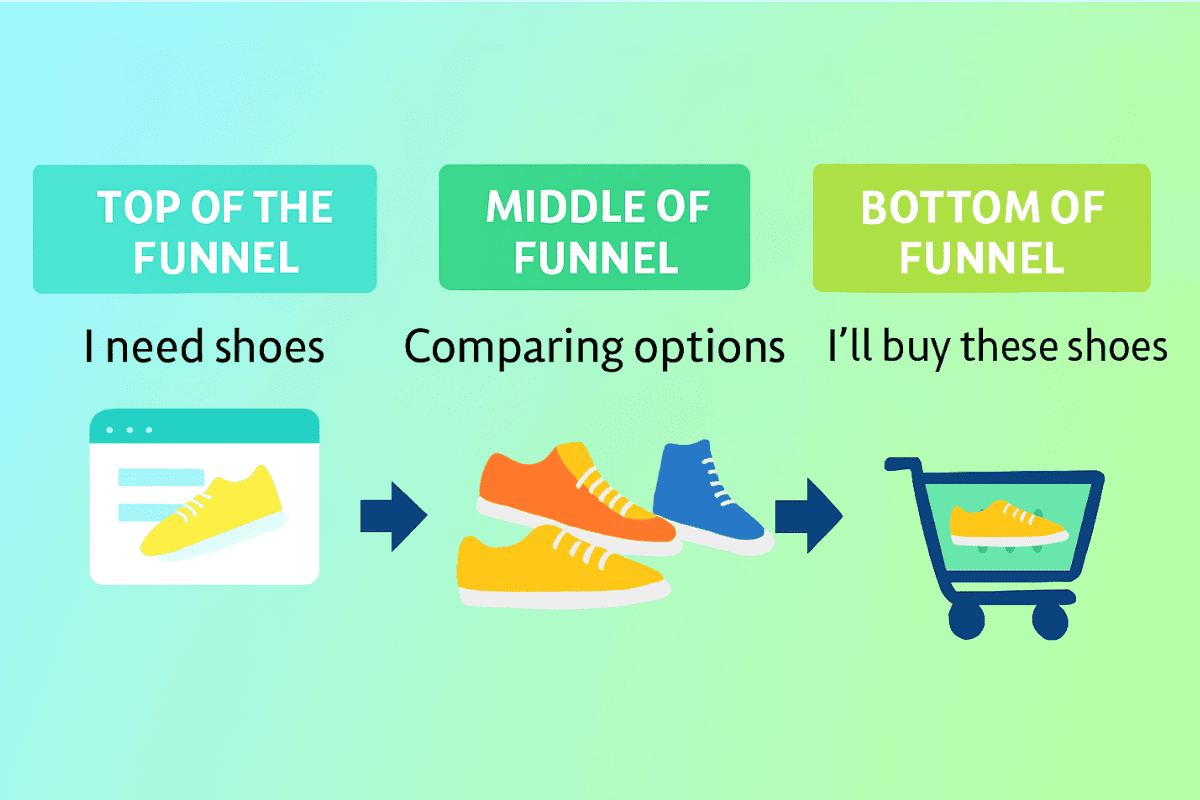
The Middle of the Funnel
In this stage, people are considering options and comparing businesses. They want to see if your product or service fits their needs. Here, trust-building is critical through reviews, case studies, or valuable content.
The Bottom of the Funnel
At this stage, people are ready to make a decision. Some will buy, and others may walk away for different reasons. Clear offers, guarantees, and smooth checkout processes increase conversions significantly.
Why the Funnel Matters
The funnel shows that not everyone becomes a paying customer. That’s normal because every step naturally filters people based on interest.
Understand it to focus energy on guiding the right people. This process makes your marketing efforts more effective and results more predictable. 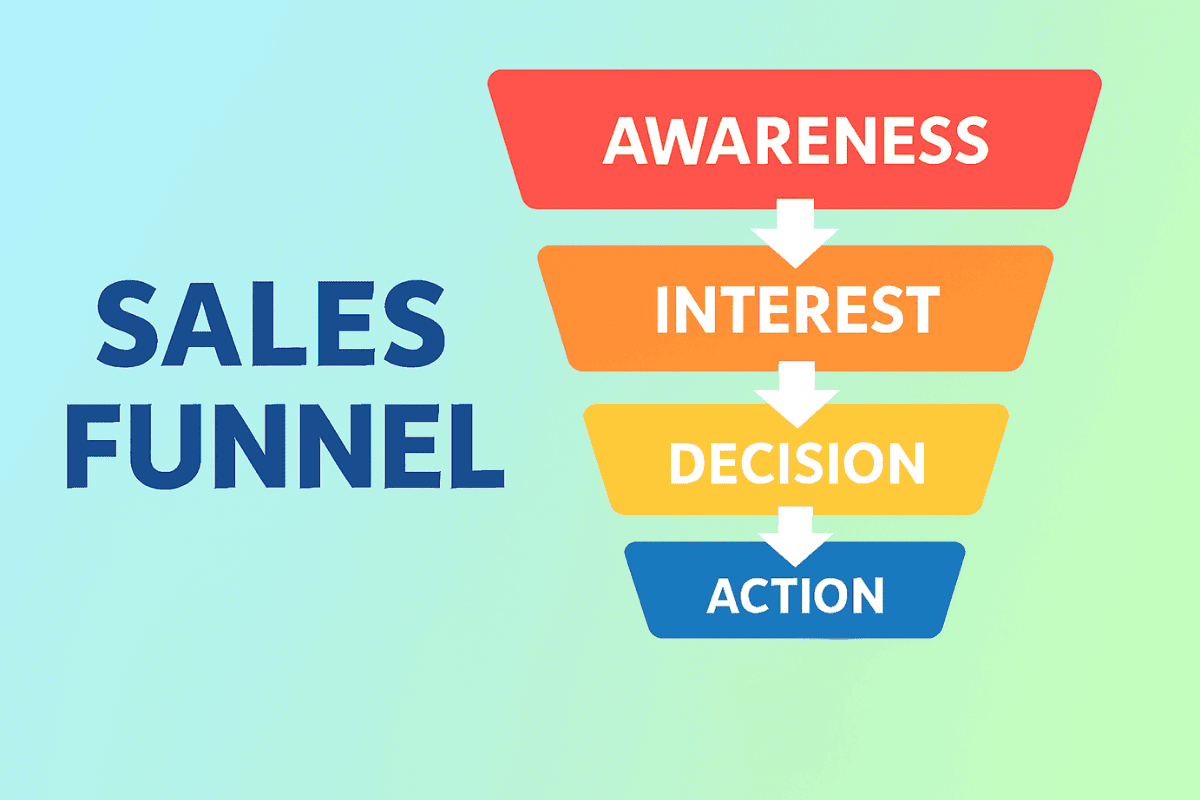
The Main Stages of a Sales Funnel
A sales funnel works in clear steps that guide potential customers. Each stage has a purpose that moves people closer to buying. Let’s look at the four main stages in detail.
Awareness
This is the very first stage of the funnel. People notice your brand through ads, posts, or simple word of mouth. Your job here is to show up where they are. Helpful, engaging content works best to grab their attention.
Interest
At this stage, people want to know more about you. They read your posts, watch videos, or join your email list. Your focus should be on building trust with valuable, clear information.
Decision
Here, people are seriously considering buying your product or service. They compare options, check reviews, and weigh prices before making a move. Strong offers, testimonials, and clear benefits help them choose you.
Action
This is the stage where the purchase finally happens. It could be buying a product, booking a call, or signing up. Your goal is to make this step as simple as possible. Clear buttons, easy checkout, and guarantees make a big difference.
Why Sales Funnels Are Necessary for Your Business
Sales funnels are not just marketing buzzwords; they’re real business tools. They help you track the customer journey and spot weak points.
Without a funnel, it’s hard to know why people leave. With one, you can guide them step by step toward buying. Here’s why they matter:
- Clarity on Customer Journey: A funnel shows how strangers become paying customers.
- Spot Drop-Offs: You’ll see where people lose interest or leave completely.
- Increase Conversions: Funnels help you turn visitors into actual paying buyers.
- Save Money: Instead of guessing, you focus only on what’s working.
- Build Relationships: Funnels nurture trust, making customers more likely to return.
Imagine a funnel as your roadmap to more sales. It organizes the messy process of selling into simple, trackable steps.
You’ll know exactly where to improve, whether it’s your ads, landing page, or checkout process. Businesses that use funnels waste less time and energy.
They make smarter decisions based on data, not random guesses. Whether you run a small shop or an online store, funnels work. That’s why every business should use one.

How to Create a Basic Sales Funnel for Beginners
Building a sales funnel doesn’t have to feel overwhelming. Beginners can keep it simple and still see results. The goal is to move people smoothly from curiosity to purchase.
Let’s break it down step by step!
Attract People
Start by driving traffic using social media, ads, or SEO. The goal is getting attention where your potential customers already spend time.
Give Them Value
Offer free content, discounts, or useful information to build early interest. People trust brands that give before asking for anything.
Build Trust
Social proof like reviews, testimonials, and professional design makes a difference. Customers feel safer when they see others have positive experiences.
Make Buying Easy
Remove friction by offering simple checkout and clear calls-to-action. Every extra step increases the chance people will leave.
Putting It All Together
A beginner funnel doesn’t need to be fancy to work. Just focus on guiding people naturally from awareness to action. Over time, you can improve and expand as your business grows.
Common Mistakes to Avoid
Many beginners struggle with funnels because they overlook simple basics. A funnel works best when you treat it like a relationship. If you rush or ignore key parts, you’ll lose customers fast.
Here are some common mistakes you should avoid:
Expecting Sales Too Quickly
People rarely buy the first time they see your brand. They need time, trust, and proof before making a purchase decision.
Confusing Websites
A messy or unclear website makes visitors click away instantly. Keep navigation simple, buttons clear, and checkout smooth for the best results.
Ignoring Follow-Up
Most sales happen after multiple touches, not just the first. Emails, retargeting ads, and reminders help bring people back to buy.
Forgetting Customer Support
The funnel doesn’t end after someone completes a purchase. Great support builds loyalty and turns buyers into repeat customers.
Avoiding these mistakes makes your funnel more reliable and effective. Focus on trust, simplicity, follow-up, and support to keep sales growing.

Conclusion
A sales funnel is the journey customers take before buying. It helps you see where people lose interest and why. Instead of guessing, you can guide them through each stage clearly.
Think about your own business and where people usually drop off. Are they leaving at checkout, or before showing real interest? Each step is a chance to improve and bring them closer.
With a funnel, you control the journey and increase conversions. Keep it simple, improve as you go, and watch your sales grow.