

If you know how to read it and use it, it becomes one of the most powerful tools in your business.
In this article, I will walk you through how to use your profit and loss statement step by step so you can improve margins, control expenses, and grow steadily. We will move through each major section of the statement and turn it into action.

Let’s be clear about what a profit and loss statement represents
A profit and loss statement summarizes income and expenses over a specific period. It does not show a cash balance. It does not show assets or liabilities. It focuses only on performance during that time window.
Here is the basic structure:
| Section | What It Reflects |
| Revenue | Total sales generated |
| Cost of Goods Sold | Direct costs tied to delivery |
| Gross Profit | Revenue minus direct costs |
| Operating Expenses | Overhead and administrative costs |
| Net Profit | What remains after all expenses |
This document tells a story. It shows how money enters your business, how much it costs to create your offer, what it takes to operate, and what remains at the end.
When you understand that structure clearly, you stop feeling overwhelmed. You begin reading it as a performance summary rather than a financial puzzle.
Revenue tells you what the market is saying about your offer
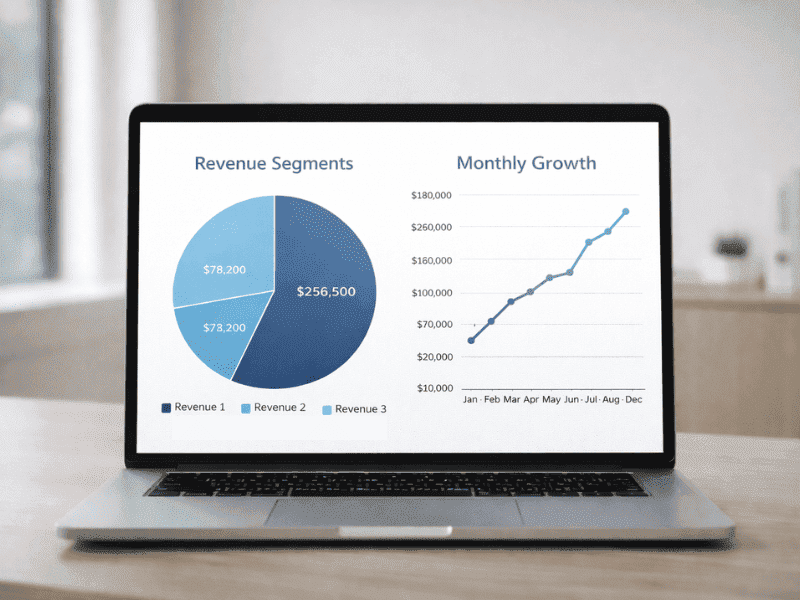
Revenue sits at the top of the statement. It is the total income your business generated during the period. Many people focus only on this number. They celebrate it when it rises and panic when it falls.
Revenue growth feels exciting. But revenue without margin is not a strength.
If your sales increased this month, that tells you demand exists. Customers responded to your offer, your pricing, or your marketing. If revenue dropped, the market reacted to something. It might be competition, pricing, seasonality, or messaging.
Instead of looking at revenue as one number, break it into meaningful pieces.
- Product lines
- Service categories
- Customer types
- Sales channels
That breakdown changes your perspective.
| Revenue Source | Amount | Contribution |
| Product A | 50,000 | 40% |
| Service B | 40,000 | 32% |
| Product C | 35,000 | 28.00% |
Now you can see where energy should go. One product may carry most of the revenue but produce little profit. Another may be smaller in size but stronger in margin.
When you review revenue monthly, ask yourself which source deserves more focus next month. Do not chase growth everywhere. Direct attention to where it multiplies profit.
Gross profit reveals whether your pricing and cost structure make sense
Gross profit equals revenue minus cost of goods sold. These costs include materials, direct labor, manufacturing, subcontractors, or any expense directly tied to delivering your product or service.
Let us say your revenue was 200,000, and direct costs were 120,000. That leaves 80,000 in gross profit. Your gross margin would be 40 percent.
This percentage is critical. It tells you how much room you have to pay overhead and still generate profit.
If your gross margin declines over time, something inside your operations shifted.
- Supplier costs may have increased
- Discounts may have become frequent
- Pricing may not reflect value
- Efficiency may have dropped
Revenue growth with shrinking gross margin is not real progress. It creates stress because your business works harder but retains less.
Track gross margin monthly.
| Month | Revenue | Gross Margin |
| January | 180,000 | 45% |
| February | 200,000 | 41% |
| March | 215,000 | 38.00% |
You see the pattern immediately. Sales grew, but profitability weakened. That requires attention before expansion continues.
If the margin shrinks, you can respond in practical ways.
- Review pricing and consider moderate increases
- Renegotiate supplier contracts
- Improve operational efficiency
- Reduce unnecessary discounting
Margin discipline strengthens growth. It protects the business from hidden erosion.
Operating expenses reflect your leadership discipline
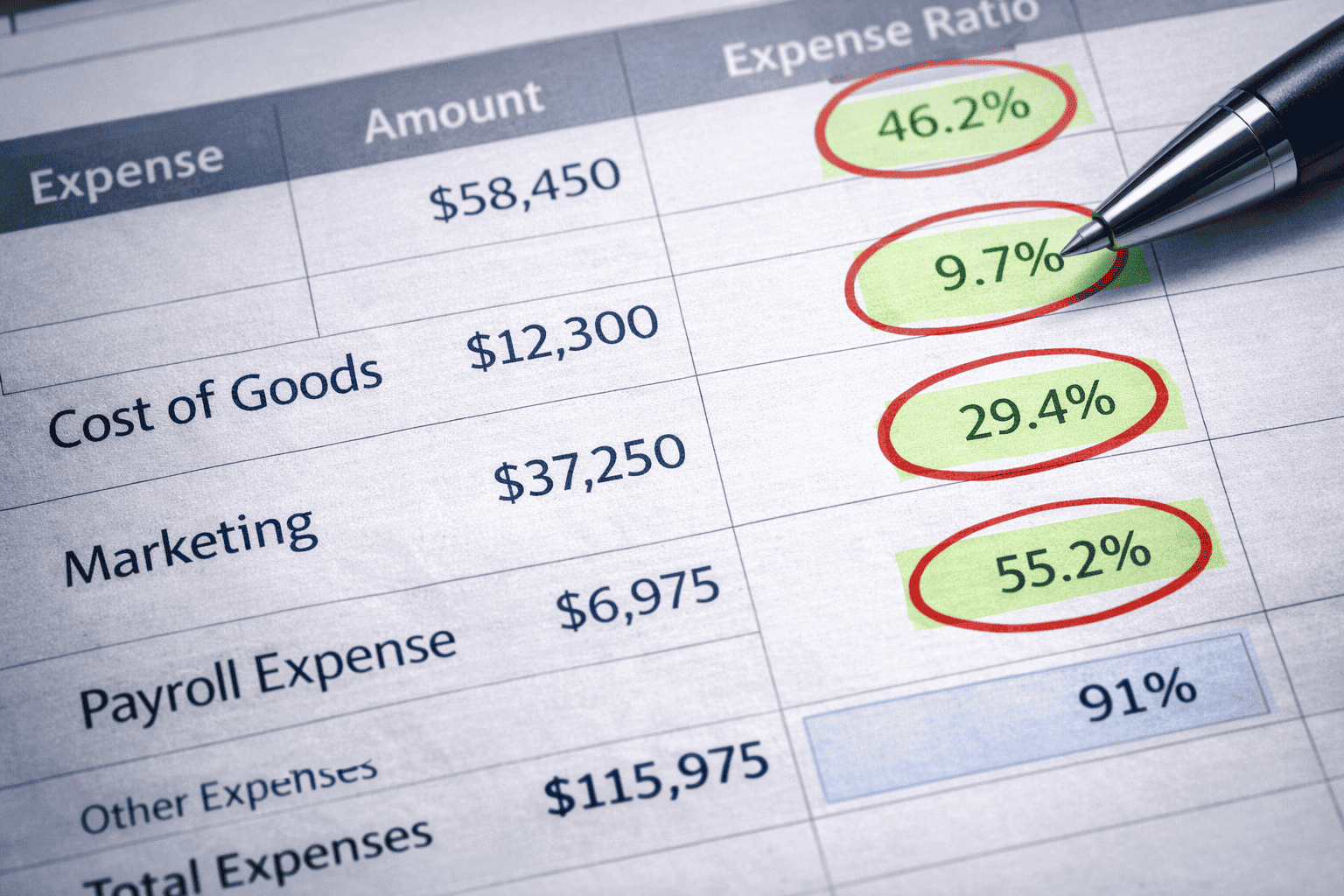
Operating expenses include salaries, rent, utilities, marketing costs, software subscriptions, professional fees, and other overhead items. These costs keep your business running, but they do not directly produce the product.
As revenue grows, many businesses allow operating expenses to rise quietly. They add tools, increase payroll, test marketing channels, or expand office space. Expansion feels productive. But without review, overhead grows faster than revenue.
Instead of looking only at dollar amounts, look at ratios.
Calculate each major category as a percentage of revenue.
| Category | Monthly Cost | Percentage of Revenue |
| Payroll | 60,000 | 30% |
| Marketing | 20,000 | 10% |
| Rent | 15,000 | 7.50% |
| Software | 8,000 | 4% |
This structure gives clarity. It shows how much of your income supports each function.
If payroll moves from 30 percent to 38 percent without a revenue jump, something shifted. If marketing expense doubles but revenue remains flat, the return must be evaluated.
Operating expense review is not about cutting everything. It is about aligning spending with results.
- Keep costs that generate return
- Reduce costs that add complexity without value
- Delay expenses that do not support growth
This habit alone improves profitability without increasing sales.

Net profit shows whether your structure truly supports growth
Net profit equals revenue minus all expenses. It represents the financial result of your entire system.
If revenue is strong, margin is healthy, and expenses are controlled, net profit will reflect that alignment.
But if one piece fails, net profit shows the consequence.
Instead of celebrating one strong month, look at patterns.
| Month | Revenue | Net Profit | Net Margin |
| January | 200,000 | 30,000 | 15% |
| February | 210,000 | 28,000 | 13% |
| March | 220,000 | 25,000 | 11% |
Revenue grew, but net margin declined. That trend must be corrected before scaling further.
Net profit margin gives a clear target. If you aim for a 20 percent margin and currently sit at 12 percent, your growth strategy must address pricing, cost control, or operational efficiency.
When the margin improves, growth becomes stable rather than fragile.
A monthly review keeps you proactive instead of reactive

The most powerful change you can make is consistency.
Review your profit and loss statement every month with the same structure.
- Compare revenue sources
- Review gross margin trend
- Evaluate the top three expense categories
- Calculate net profit margin
- Identify one adjustment for next month
This process does not require hours. One focused hour each month keeps your business aligned.
When you delay review for a year, small issues compound. When you review monthly, you correct early.
Turning numbers into decisions that move the business forward
Numbers alone do not grow a business. Decisions do.
Once you identify patterns, translate them into clear actions.
If a product has a high margin and steady demand, increase marketing focus there. If an offer produces revenue but drains margin, improve pricing or reconsider its place in your portfolio. If overhead consumes too much income, simplify the structure.
Growth becomes predictable when your decisions respond to numbers rather than emotion.
Financial clarity reduces stress. It removes guesswork. It gives you confidence based on data rather than hope.
Final perspective on using your profit and loss statement effectively
Your profit and loss statement is not a scorecard for judgment. It is feedback from reality. It shows the effect of your pricing, your efficiency, your discipline, and your strategy.
When you treat it as a leadership tool rather than a tax document, everything changes. You stop chasing revenue blindly. You focus on margin strength. You manage expenses intentionally. You build profit that supports expansion.
Review it monthly. Look for patterns. Adjust calmly.
That steady rhythm builds durable growth over time.