I’ve seen people spend weeks trying to fix things that should have taken one hour. Wrong tools, poor setup, no clear system. That’s where most beginners get stuck.
Here’s the goal of this guide. I’m going to help you understand which tools you actually need, how they fit together, and how to build something that works without overcomplicating it.
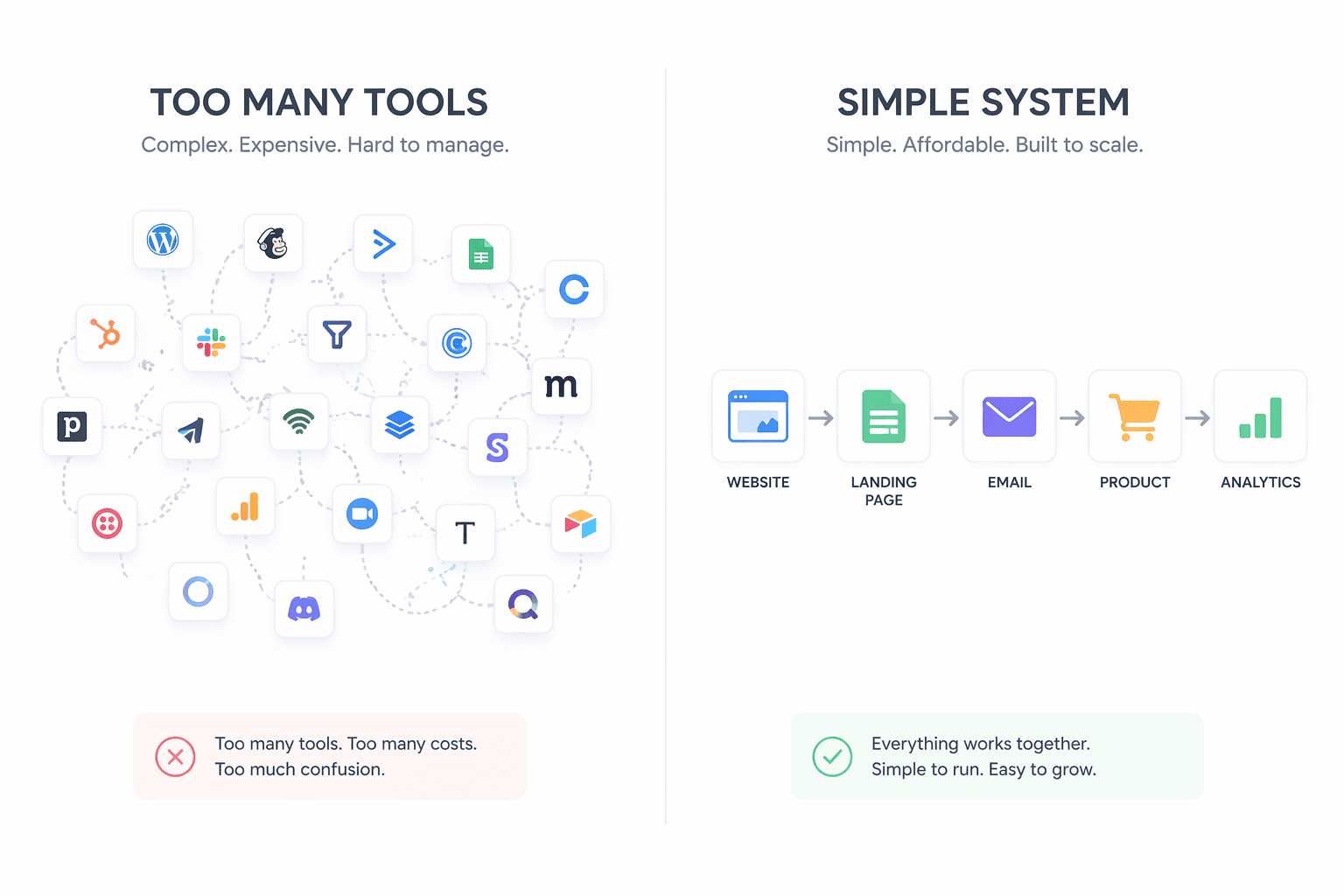
You don’t need everything, but you do need the right pieces
Let me make this simple for you. You don’t need 20 tools. You don’t need complicated systems. But you do need the right pieces working together.
Here’s what that system looks like:
- A place where people land
- A page that converts them
- A way to follow up
- A system to sell
- A way to track what is happening
- A way to understand what people actually want
Now simply look at this:
| Component | What It Does | Why It Matters |
| Website Builder | Creates your main site | Builds trust |
| Landing Pages | Focused pages | Converts visitors |
| Email Marketing | Sends emails | Brings repeat sales |
| Course Platform | Hosts your course | Delivers value |
| Tracking Tool | Tracks clicks and sales | Shows what works |
| Research Tool | Finds keywords and competitors | Helps you plan |
| Automation | Connects everything | Saves time |
If you miss even one of these, things start breaking. Either you don’t get traffic, or you don’t convert, or you don’t make sales.
That matters more than design in the long run. If you want to understand hosting properly, this guide explains it clearly: How to choose the best web hosting for your website.
Landing Page Tools That Turn Visitors Into Customers

Getting visitors is one thing. Turning them into leads or buyers is a completely different game.
This is where landing pages do the heavy lifting.
A landing page is not about looking fancy. It’s about being clear. One message. One goal. One action.
Now, instead of building everything from scratch, most people use tools that are built specifically for conversion. One good example is Leadpages.
Here’s why tools like this make a difference.
You don’t sit there trying to design from zero. You start with templates that are already structured to convert. Then you just adjust:
- Your headline
- Your offer
- Your message
You can also test small changes like headlines or buttons to see what works better.
This is where a lot of sales actually happen. Not on the first visit, but later.
All-in-One Platforms That Run Your Entire Business
Now, you might be thinking… managing multiple tools sounds like a lot.
You’re not wrong.
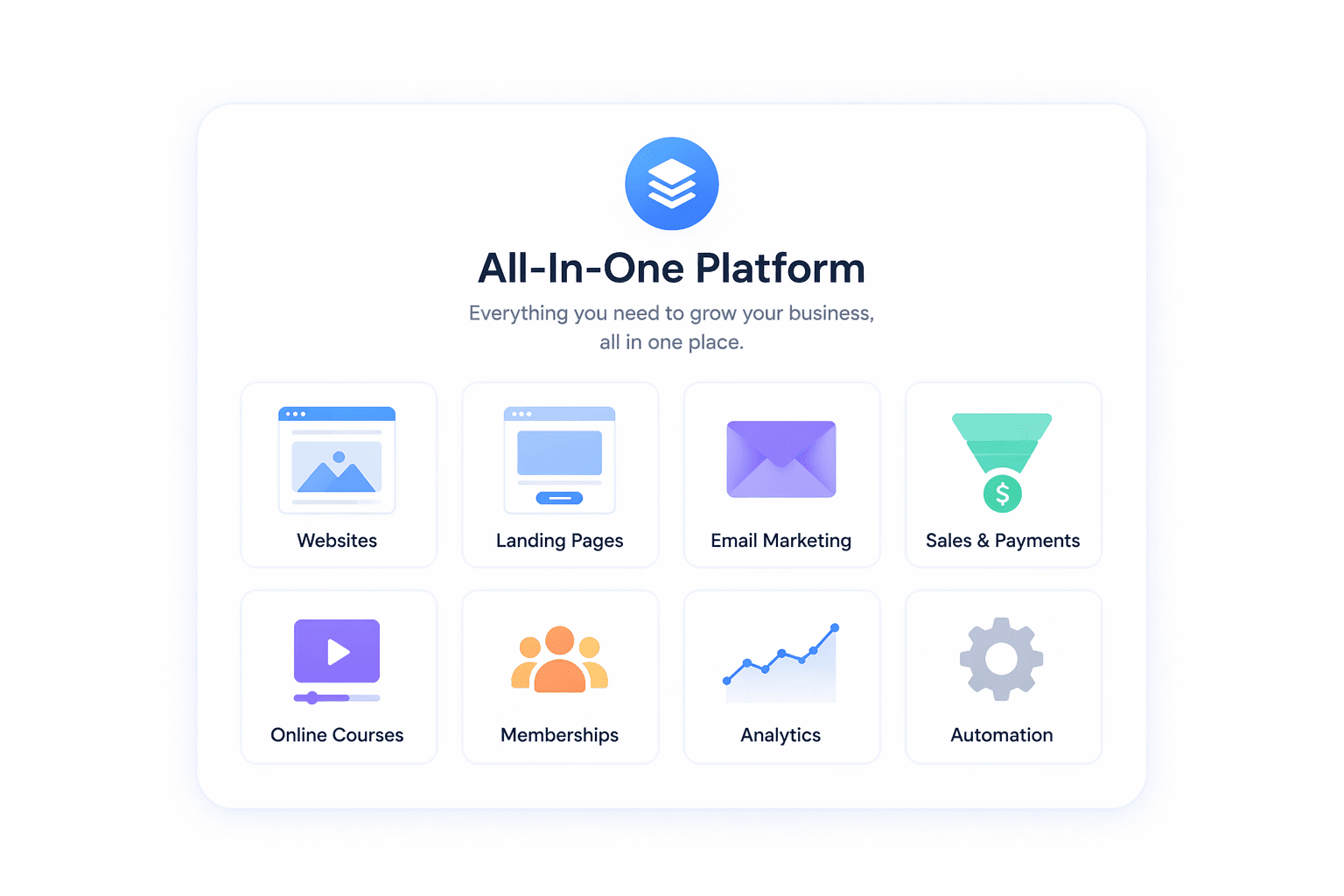
That’s why some people prefer using one system that handles everything. This is where platforms like Kartra come in.
Instead of using separate tools, you get everything in one place:
- Pages
- Funnels
- Memberships
- Payments
So instead of connecting different tools, you build everything inside one dashboard.
That means you stop wasting time and money on things that don’t work, and you double down on what does.
Before you build anything, you need to know what already works
This is another area where people rush too fast. They start building pages, writing content, creating offers… without knowing if anyone even wants it.
That’s where research comes in. Instead of guessing, you look at data. Tools like SpyFu help you do exactly that.
You can see:
- What keywords do people search for
- What your competitors are doing
- What kind of ads are already working
This changes everything. Instead of building blindly, you build based on what already works in the market.
That saves you time. It saves money. And it gives you a much better chance of success.
How to Choose the Right Tool Based on Your Goal
You don’t need to overthink this. Just match your goal with the right tool.
| Goal | Best Tool Type |
| Build landing pages | Leadpages |
| Email marketing | AWeber |
| Full business system | Kartra |
| Track performance | ClickMagick |
| Research market | SpyFu |
| Website hosting | WP Engine |
If your goal is clear, your tool choice becomes easy. Don’t overthink it. Just match what you need with the right tool.
People waste time here, don’t make these mistakes

Let me save you from a few common mistakes.
First, people try to use too many tools at once. That creates confusion instead of progress.
Second, many ignore email marketing. That means they lose all the people who didn’t buy immediately.
Third, people focus too much on design. A nice-looking page does not mean it converts.
Then there’s tracking. If you don’t track, you don’t improve. It’s that simple.
And finally, skipping research. If you don’t know what people want, you end up building something nobody needs.
Each of these mistakes slows you down. Avoid them early.
Connect everything for a smooth workflow
Now let’s bring everything together so you can actually see how this works in real life.
A simple setup looks like this:
- Someone lands on your page
- ClickMagick tracks what they do
- They enter their email
- AWeber starts sending follow-ups
- They come back and buy your product or course
That’s your system. Simple. Clean. Effective. Once this is running, you can improve each step one by one.
Final Thoughts: Start simple, then grow when you are ready
You don’t need everything on day one.
Start with:
- One landing page.
- One email sequence.
- One simple offer.
Focus on getting results first. Then you can add more tools, automation, and systems.
At the end of the day, tools are there to support your business. If they start making things harder, you’re doing too much. That’s how real online businesses are built.