
You’ve probably thought about this already. Build a website, create a simple page, maybe sell a course or digital product online without writing a single


In this article, I will walk you through how listening to books improves learning, increases convenience, and reshapes the way we think about reading itself.
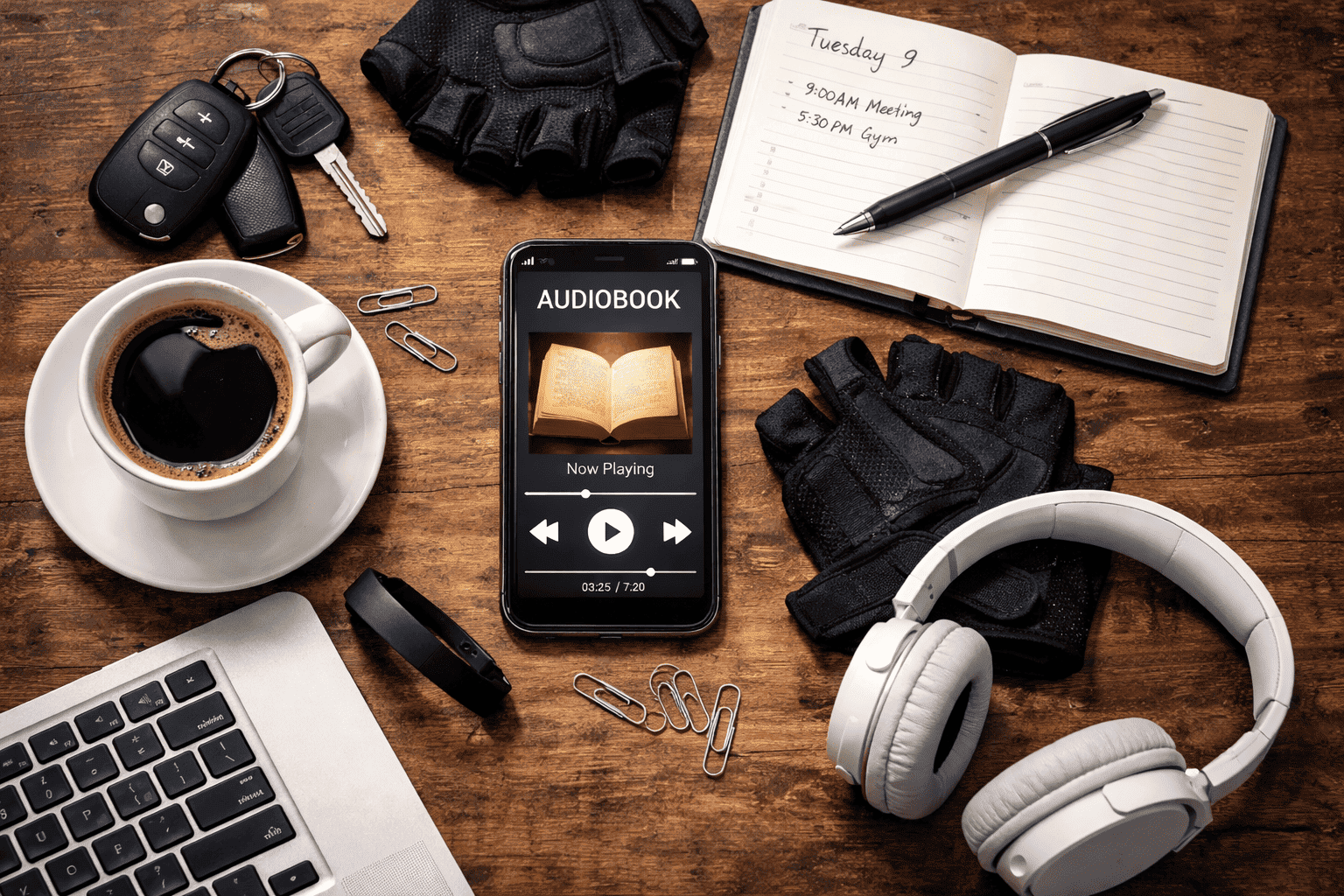
Traditional reading requires full visual attention. You sit down. You open a book. You focus. That is powerful, but it also limits when learning can occur. Listening removes that limitation.
When you use audiobooks, you can learn during activities that do not require mental concentration.
Instead of separating learning time from life, you integrate it.
For example, a 30-minute commute each way equals one hour per day. That equals roughly 20 hours per month. That is enough time to finish multiple nonfiction books.
When you convert unused time into learning time, knowledge accumulation accelerates without adding pressure to your schedule.
Some people assume listening is passive. Research suggests it can be just as effective for comprehension, especially when the listener is focused.
A study published in the Journal of Verbal Learning and Verbal Behavior found that comprehension levels between listening and reading were comparable for many participants when attention levels were equal.
Listening activates different cognitive pathways. Tone, pacing, and emphasis from narrators add context. In nonfiction, this can make complex topics easier to digest. In fiction, character voices enhance immersion.
Listening can be especially helpful when:
It does not mean audio replaces reading. It means it expands learning styles.
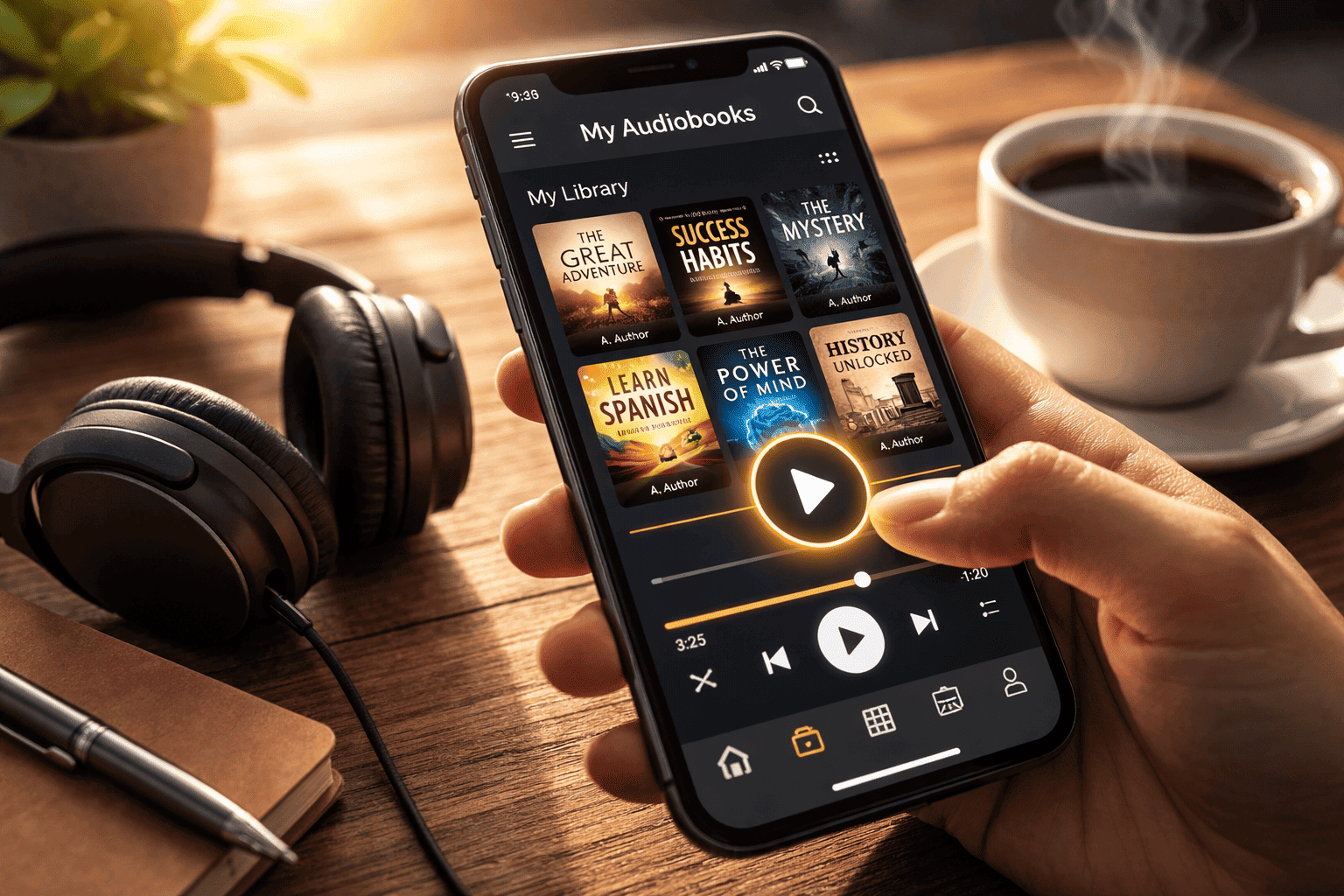
One of the biggest obstacles to reading is not intelligence or interest. It is friction. You need quiet time. Good lighting. Physical presence with the book. Mental space.
Audiobooks reduce friction dramatically.
When friction drops, consistency improves.
If you tell yourself, “I need one uninterrupted hour to read,” you may postpone it. If you tell yourself, “I can listen while driving,” it becomes automatic.
Consistency matters more than intensity. Listening 20 minutes daily often produces more knowledge over time than reading two hours once per week.
Not everyone learns the same way. Some people absorb information visually. Others process better through hearing. Audiobooks make content accessible to more people.
For individuals with:
Audio becomes a powerful equalizer.
The National Center for Education Statistics reports that millions of adults in the U.S. struggle with reading proficiency at higher levels. Audiobooks provide an alternative path to knowledge consumption without stigma.
Listening also allows adjustable playback speed. You can slow down complex material or increase speed once familiar. That flexibility supports different learning preferences.
Let me be clear. Deep learning still requires focus. If you are studying for an exam, you should give the material your full attention. But many forms of knowledge do not require full isolation.
Leadership books. Business biographies. Self-improvement guides. Industry trends. These can be absorbed while performing low cognitive tasks.
This is where listening becomes strategic.
You can turn:
The key is matching the material to the activity.
Activity | Best Type of Audiobook |
Driving | Business, leadership, biography |
Walking | Personal development |
Gym cardio | Motivational or storytelling |
Cleaning | Light nonfiction or fiction |
Instead of asking whether listening replaces reading, ask how it expands your capacity to learn without rearranging your life.
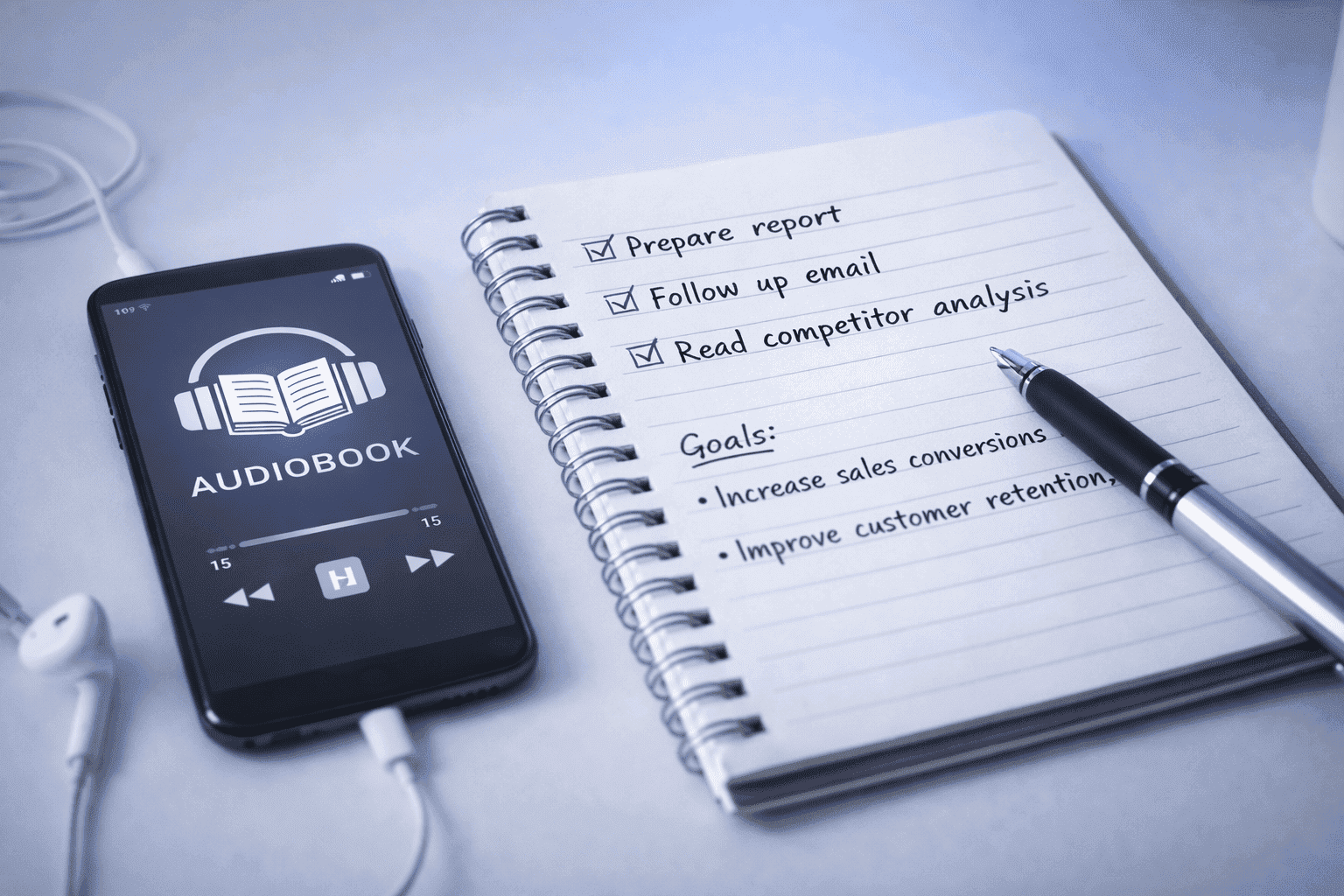
Listening alone is powerful, but pairing it with small reinforcement habits increases retention.
Try these techniques:
Retention improves when information is processed actively.
Even a simple habit like summarizing one idea at the end of a listening session increases memory.
The future of reading is not silent. It is integrated. Listening to books gives you access to knowledge without demanding perfect conditions. It turns downtime into growth time. It supports different learning styles. It reduces the friction that prevents consistency.
You do not need to choose between reading and listening. You can use both strategically. Listen during movement. Read during focused sessions. Combine them when possible.
What matters most is not the format. It is the habit. If listening helps you stay consistent, learn more, and engage deeply with ideas you would otherwise postpone, then it is not a shortcut. It is a smart adaptation.


You’ve probably thought about this already. Build a website, create a simple page, maybe sell a course or digital product online without writing a single

Most business owners look at their profit and loss statement only when tax season rolls around or when their accountant asks for it. I understand
If you run a business, people will look you up. They do it before they call. They do it before they buy. They do it