
Let’s walk you step by step on how to use AI to refine, test, and validate your business ideas. In the end, you’ll know how to move confidently from idea to launch without wasting time or money.

What It Means to “Validate” a Business Idea
Validation is the process of confirming that your idea solves a real problem. It’s how you check if people will pay for what you want to sell.
Without validation, even great ideas can fail due to poor market fit. AI makes this process faster and more reliable by turning vague assumptions into actionable insights.
It helps test audience interest, spot demand trends, and predict how your business might perform before launch.
| Purpose of Validation | What It Helps You Avoid |
| Understanding customer demand | Building products nobody wants |
| Defining pricing and positioning | Setting unrealistic or untested prices |
| Identifying real competition | Entering markets that are already saturated |
| Testing audience reactions | Spending too early without real proof |
When done right, validation saves money and builds confidence. AI gives you the data to make informed choices instead of emotional ones.

Step 1: Use AI to Refine Your Business Idea
Every business starts with an idea, but few are clear from the start. AI helps you turn that raw thought into a solid, market-ready concept.
Here’s how AI can guide your early brainstorming and refinement process:
- Clarify your niche. Ask AI to suggest related industries or sub-niches.
- Identify pain points. Tools can analyze reviews or forums for real problems.
- Define your value. Use prompts like “What makes this idea unique?” to sharpen focus.
- Generate brand names. AI tools like ChatGPT or Gemini offer catchy, relevant ideas.
- Polish your pitch. AI writing assistants summarize your idea into clear, concise language.
For instance, if your idea is an online fitness platform, AI can help identify audience types: busy professionals, students, or new parents.
It recommends tone, features, and messaging to connect with each group. AI doesn’t replace creativity; it amplifies. It gives structure and clarity to your thoughts so you can test smarter later.

Step 2: Research Your Market Using AI Tools
Before building anything, you must understand your market. Who are your customers? Who are your competitors?
How big is the demand? AI makes these answers easier to find through real-time data and smart analysis.
Finding Your Audience
AI tools can profile your potential customers. Ask questions like, “Who is most likely to buy an organic skincare brand?” The AI will list possible demographics, lifestyles, and motivations.
Spotting Trends
Platforms like MarketMuse or Exploding Topics track industry trends automatically. They show rising topics, new products, or sudden changes in consumer interest. You’ll know which ideas are gaining attention before everyone else notices.
Studying Competitors
AI-driven SEO tools such as Ahrefs or Semrush identify who already dominates your space. They reveal what keywords they target, how they position themselves, and what they charge.
This lets you build smarter strategies from day one. Market research used to be expensive and time-consuming.
Now, AI tools deliver those insights in minutes, helping you focus on what matters: building solutions people truly want.

Step 3: Analyze Competitors and Gaps with AI
Knowing what others are doing helps you stand out in crowded markets. AI can scan thousands of pages, comments, and reviews faster than any human researcher.
That means you can discover opportunities hidden between your competitors’ weaknesses. For example, imagine you’re planning a new productivity app.
You could use AI to review app store feedback for your competitors. Patterns will appear; users might complain about confusing layouts or missing features.
Those insights become your guide to building something better. AI tools like Perplexity, ChatGPT, and Notion AI can also summarize brand messaging and pricing models.
They show how competitors talk to customers and what kind of emotional appeal they use. See what works and what fails to define your own position clearly.
The goal isn’t to copy others; it’s to see where they stop short. AI gives you that edge by highlighting the unmet needs waiting to be filled.
Step 4: Validate Demand with AI-Driven Testing
Once your idea looks strong, it’s time to test if people will actually buy it. AI helps you run quick, low-cost experiments that reveal genuine interest.
| AI Tool | Use Case | Outcome |
| Copy.ai or Jasper | Write ad copy for testing ideas | See which messages drive clicks |
| Unbounce Smart Builder | Create quick landing pages | Track visitor signups or downloads |
| ChatGPT + Google Ads | Design and analyze micro ad campaigns | Measure real-world engagement |
| Framer AI | Build interactive mockups | Gather reactions before building a full product |
These small-scale tests are fast and affordable. You can measure clicks, signups, or waitlist numbers before spending big.
Here’s a simple approach:
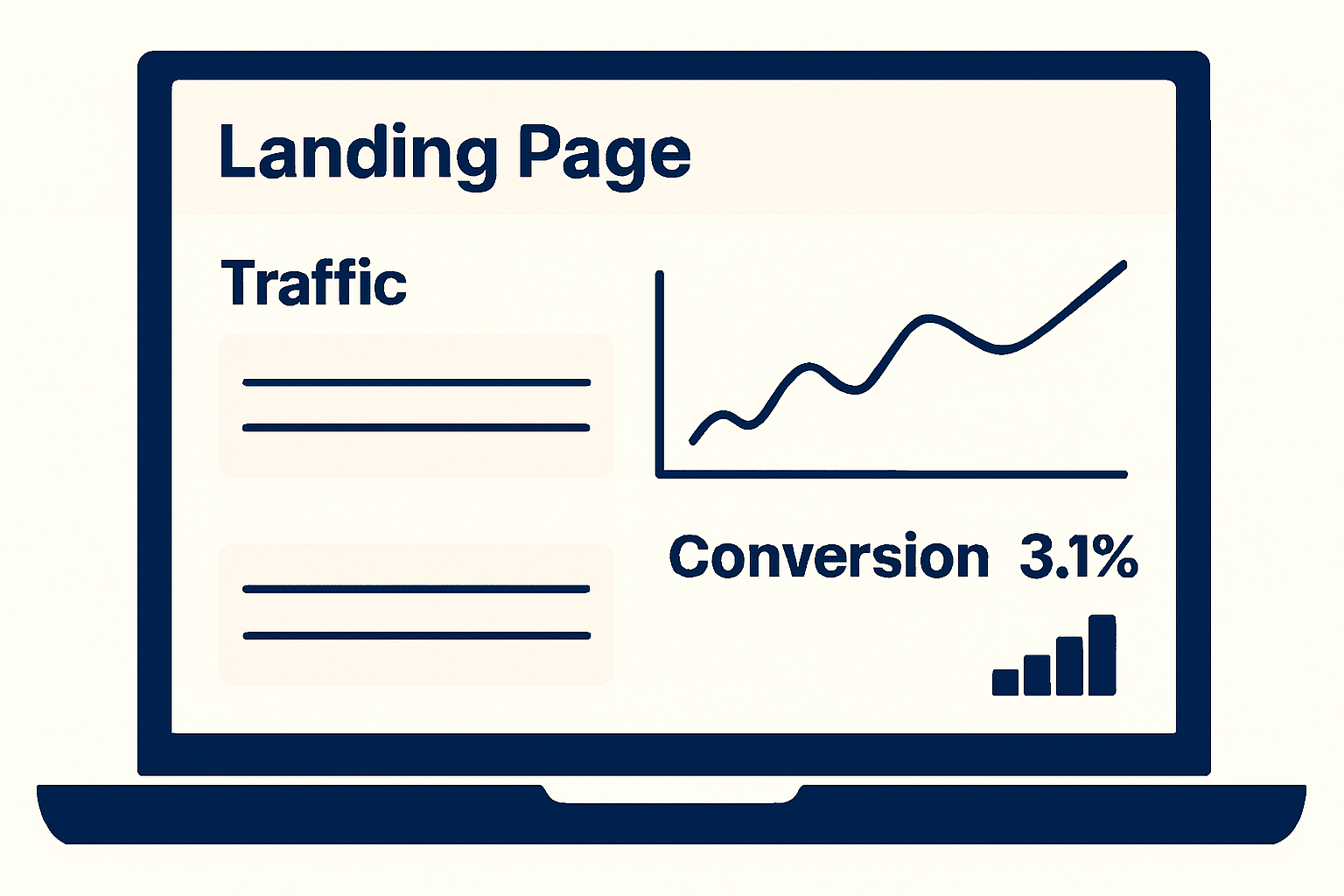
- Create an AI-generated landing page that explains your idea.
- Run an ad with AI-written copy targeting your niche audience.
- Watch how many people show interest.
Even 100 visitors can reveal whether your idea excites people or needs more work. AI helps you replace guessing with data-backed validation that builds confidence.
Step 5: Use AI to Gather and Analyze Feedback
After testing demand, feedback becomes your next goldmine. AI can collect, sort, and summarize it much faster than traditional methods.
Here’s how AI turns feedback into clear direction:
- Collect insights quickly. Tools like Typeform with AI analysis summarize survey responses.
- Organize themes. Notion AI categorizes comments by sentiment or topic.
- Spot key takeaways. ChatGPT highlights recurring issues or praise points.
- Prioritize fixes. AI ranks feedback by frequency or impact.
For example, if many users say “the checkout is confusing,” AI flags that theme instantly. You can then focus on improving the experience instead of combing through hundreds of messages.
AI also translates free-form comments into action items. It turns raw text into summaries like “Users want faster delivery” or “Customers love the eco-friendly packaging.”
The faster you interpret feedback, the sooner you can adjust your strategy and relaunch stronger.

Step 6: Forecast and Plan with AI Insights
Once you’ve refined your product and gathered enough feedback, it’s time to plan ahead. AI can help forecast performance, predict trends, and even simulate growth scenarios.
Predicting Performance
Tools like Rows AI or Akkio can forecast sales or conversion rates. They use early data from your tests to estimate future outcomes. You’ll know whether your growth goals are realistic before you invest more.
Testing Pricing and Profitability
AI-powered spreadsheets estimate margins, revenue, and costs instantly. Ask ChatGPT, “What’s my expected profit if I sell 500 units at $30 each?” You’ll get a breakdown showing cost assumptions and profit range.
Planning for Scalability
Once forecasts look promising, AI can help plan expansion. It suggests hiring needs, marketing budgets, and operational workflows.
Notion AI can even generate full business strategy outlines. AI doesn’t just analyze; it plans. It helps you make confident, data-backed decisions for the next stage of your business journey.
Common Mistakes to Avoid When Using AI for Validation
AI is a powerful tool, but like any tool, it must be used wisely. Many new entrepreneurs fall into similar traps when relying too heavily on automation.
| Mistake | Why It’s a Problem | Better Approach |
| Depending only on AI | Data can miss emotional or cultural nuance | Combine AI insights with real user testing |
| Ignoring real-world trials | Predictions don’t always reflect behavior | Run small campaigns to verify AI data |
| Using too many platforms | Leads to confusion and redundancy | Start with one or two tools you understand |
| Forgetting human creativity | AI can’t replace your vision | Use AI to assist, not dictate, your strategy |
The best results come when human intuition and AI logic work together. Use technology to accelerate insight, not to replace your entrepreneurial instincts.

Conclusion
AI has changed how entrepreneurs validate and launch new business ideas. It saves time, reduces costs, and helps you make confident, data-driven choices.
You no longer need months of manual research or large teams to test concepts. From refining ideas to forecasting results, AI supports you at every stage.
It gives structure, clarity, and speed, but it still needs your direction. AI won’t replace your vision; it will strengthen it. The smartest founders today aren’t the ones who guess; they test.
So take your next idea, use AI to validate it fast, and move one step closer to launching with confidence.