

If you skip this step, your dream business could face problems later: payment blocks, fines, or loss of trust.
Let’s walk you through how to register your online business legally, step by step. You’ll learn why it matters, what documents you need, and how to do it quickly from home.

Why Legal Registration Matters for Online Businesses
Many new entrepreneurs start selling online without registering. It feels easier until legal or financial issues appear down the road.
Registering your business protects your personal assets and strengthens customer trust. Let’s look at why registration is a must for every serious online brand.
Protects Your Personal Assets
Without registration, you and your business are legally the same. If someone sues your company, your personal savings or property could be at risk.
Once registered, your business becomes a separate legal entity. This separation keeps your home, car, and bank account safe from business debts.
Builds Customer Trust
Customers prefer buying from registered, legitimate companies. They see your business as stable, accountable, and credible.
Displaying a business license or registration number adds immediate trust. It shows you’re serious, transparent, and compliant with regulations.
Enables Banking and Payments
Banks and payment gateways require proof of business registration. You can’t open a business bank account or receive payments without it.
Registration simplifies financial operations and separates personal and business transactions for a smoother and better operation.
Simplifies Taxes and Compliance
Registered businesses receive a tax ID that simplifies accounting and reporting. You can pay taxes correctly, access deductions, and avoid penalties.
Without proper registration, even a successful business can face heavy fines later. In short, registration isn’t just about legality; it’s about safety, professionalism, and growth.
Before You Register: Build a Strong Business Foundation
Before you rush to fill out forms, prepare your basics first. A little preparation saves time, money, and confusion during registration.
Tips to Prepare:
- Choose a unique business name. Check availability online through your local authority’s portal.
- Define your structure. Decide if you’ll operate as a sole proprietorship, LLC, or private limited company.
- Gather required documents. Prepare your identity proof, address verification, and any supporting materials.
- Pick your base location. Choose the country or state where you’ll register legally.
Example:
If you live in the U.S., you’ll register in your home state or where you’ll operate. If you sell globally, you might still register locally but comply with international tax rules.
Such small steps make the formal registration smoother later on. Think of this phase as building the foundation before constructing your digital storefront.

Step-by-Step Guide to Registering Your Online Business
Every country has its own online business registration process. But most follow a few similar steps you can complete from your computer. Here’s how to do it easily and efficiently:
Step 1: Visit the Official Registration Portal
Go to your country’s authorized government website or a certified agent portal.
Examples:
In the U.S. → your state’s Secretary of State website
In the U.K. → Companies House
In India → Ministry of Corporate Affairs (MCA) portal
Step 2: Create an Online Account
Register using your email and create a secure password. You’ll use this account to fill out forms and track your application later.
Step 3: Fill Out Business Details
Enter your business name, structure, address, directors, and ownership info. Make sure every field matches your identity and document details exactly.
Step 4: Upload Digital Copies
Attach scanned copies of required documents: ID, proof of address, and incorporation details.
Ensure your scans are clear, colored, and readable to prevent rejection.

Step 5: Pay the Registration Fee
Most portals allow secure online payments through debit/credit cards or online wallets. Keep your receipt for records; it may be needed for verification.
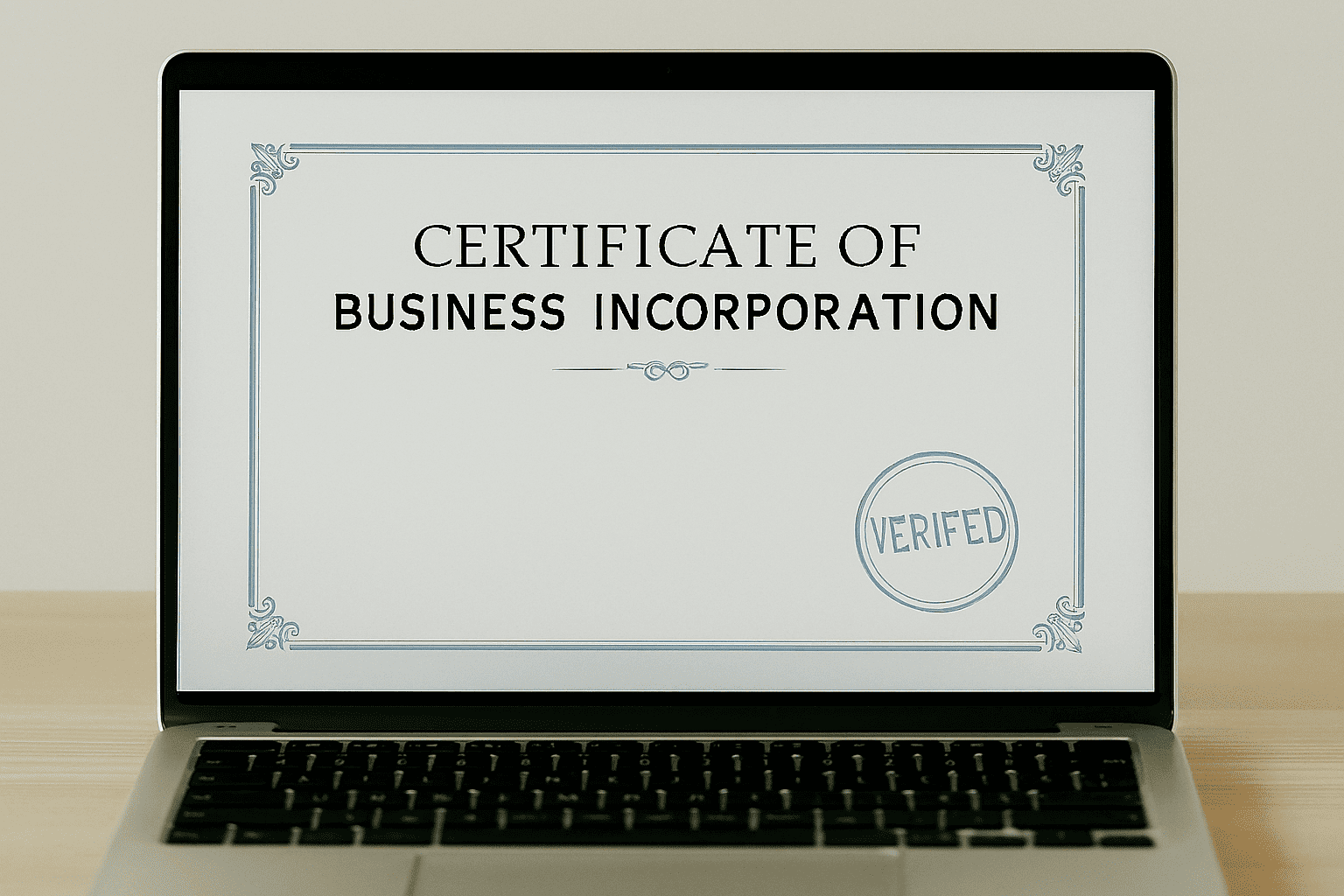
Step 6: Get Your Digital Certificate of Incorporation
Once approved, you’ll receive a soft copy of your registration certificate. Download and store it securely; this document proves your business exists legally.
Pro Tip:
Double-check spelling and accuracy before submitting your application. Even small typos can delay your approval by days or weeks.

Key Legal Documents You’ll Need
Registration requires specific documents that prove your identity and legitimacy. Prepare these files in digital format (PDF, JPG, or PNG) before you start.
| Document | Purpose |
| Valid ID (Passport, National ID, or Driver’s License) | Confirms your identity as a business owner |
| Proof of Address (Utility Bill, Lease, or Bank Statement) | Verifies your business or residence location |
| Business Name Reservation or Approval | Confirms name uniqueness and availability |
| Articles of Incorporation or Formation | Defines your business’s structure and purpose |
| Tax Identification (EIN, VAT, or TIN) | Required for tax compliance and opening bank accounts |
Keep both digital and physical copies of these documents organized. If authorities request verification later, having them ready saves time.
Extra Tip:
If you operate under a brand name different from your personal one, you may also need a “Doing Business As” (DBA) certificate or trade name registration.
Benefits of Registering Online
Online registration is far easier than traditional offline paperwork. It saves time, reduces costs, and helps you track everything digitally.
Here’s why more entrepreneurs now register their businesses completely online:
Speed and Convenience
You can finish everything from your laptop within hours or days. No standing in queues, mailing forms, or visiting government offices.
Lower Costs
Online registration often has fewer hidden expenses. You avoid courier, agent, and notary fees by doing everything directly.
Easy Tracking
Most portals let you monitor your application status in real time. You’ll see updates, receive notifications, and download approval certificates instantly.
Eco-Friendly Process
Paperless registration saves printing and reduces waste, and it is a bonus for sustainability-focused founders.
Global Accessibility
You can register and manage your business from anywhere. Whether you’re in a different time zone or working remotely, everything stays accessible online.
Online registration makes entrepreneurship more inclusive and accessible for everyone.

Common Challenges (and How to Avoid Them)
While registration is straightforward, a few challenges can slow you down.
Knowing them early helps you prepare and avoid unnecessary stress.
Banking Delays
Some banks require extra KYC checks or physical signatures. This might delay your business account setup. Pre-check bank requirements before completing registration to save time.
Document Rejection
Blurry scans or mismatched details are the most common causes of rejection. Use high-quality, colored scans and verify spelling before uploading.
Payment Errors
Occasionally, payment gateways time out or double-charge fees. Save receipts and transaction IDs immediately after paying.
Security Risks
Fake websites sometimes mimic official registration portals. Always register through the government’s verified site or official agents.
Misunderstanding Business Type
Choosing the wrong structure can lead to tax or legal confusion later. Review business structures carefully before you register.
Avoiding these pitfalls keeps your registration smooth and stress-free.

Compliance and Next Steps After Registration
Congratulations! Once registered, your business is officially recognized by law. But the journey doesn’t stop here. Staying compliant keeps your business strong.
Here’s what to do next:
Register for Taxes
Apply for your business tax identification number. This might be an EIN in the U.S., VAT in Europe, or TIN elsewhere. Use it for all invoices, receipts, and bank transactions.
Open a Business Bank Account
Separate your business finances from personal ones. A dedicated business account simplifies tax filing and accounting. It also builds credibility when customers or investors see your company’s bank details.
Apply for Licenses and Permits
Some industries require extra permits; for example, food, healthcare, or finance. Check your local authority’s list to avoid compliance issues later.
Secure Your Digital Identity
Once your business is official, register your domain name immediately. Also, claim your brand’s usernames on major social media platforms. It prevents others from misusing your brand identity online.
Keep Digital Copies of All Documents
Store copies of your registration, tax certificate, and licenses safely in the cloud. These files will be needed for audits, bank verification, or investor onboarding.
Compliance is ongoing, not a one-time step. Staying organized helps you focus on growth without worrying about legal risks.

Maintaining Legal Compliance Year After Year
Even after registering, your responsibilities continue.
Each year, businesses must renew licenses, file taxes, and update records.
Annual Checklist:
- File annual tax returns before deadlines.
- Renew business permits or professional licenses.
- Update your registered address or ownership changes promptly.
- Keep accounting and transaction records safely for at least five years.
Neglecting these can lead to penalties or business suspension. Consistency keeps your business trustworthy and legally protected.
If you expand internationally, check if your new market requires extra filings. Different countries have different e-commerce compliance standards.
Legal maintenance isn’t exciting, but it’s vital for long-term success.
Helpful Online Platforms for Business Registration
Here are some reliable official platforms that simplify online registration:
| Country/Region | Official Website | Purpose |
| United States | sba.gov / State Secretary portals | Register LLCs, corporations, or sole proprietorships |
| United Kingdom | companieshouse.gov.uk | Register private limited companies (Ltd) |
| Canada | ic.gc.ca | Register federal or provincial businesses |
| India | mca.gov.in | Incorporate private limited or LLP companies |
| Australia | asic.gov.au | Register ABN, ACN, and company structures |
Each country has slight variations, but the online process is similar. Always verify links through government websites, not third-party ads.
FAQs
Can I register my business from another country?
Yes, many countries allow foreign founders to register businesses remotely. You may need a local address or representative, depending on regulations.
Do I need a lawyer or an accountant?
Not always. Most founders register themselves using official portals. But professional help is useful if your business involves complex ownership.
How long does registration take?
Most online applications are processed within 1–5 business days. Delays happen only if documents are incomplete or unclear.
Is online registration secure?
Yes, official sites use encryption and secure payment systems. Just make sure you’re using the legitimate government domain.
What if I want to change my business name later?
You can file an amendment or name change request through your portal. Fees and timelines vary by country and state.

Conclusion
Starting an online business is exciting because it gives freedom and opportunity. But registering it legally is what turns that dream into a credible venture.
A registered business earns customer trust, protects your assets, and simplifies taxes. Preparation is key; gather your documents, pick your structure, and use official portals.
Take time to verify every detail before submitting forms online. Once your certificate arrives, you can proudly say your business is real.
Registration isn’t just a legal box to tick; it’s your business’s first milestone. It signals to the world that you’re professional, trustworthy, and ready to grow.
So, start today. Register properly, stay compliant, and operate with confidence. Your business’s future begins the moment it becomes official.