
This guide will walk you through every main business structure. You’ll learn what each one means, when to choose it, and how to adapt over time.

Why Your Business Structure Is Important?
Your business structure is more than paperwork; it’s your foundation. It determines how you operate, how you pay yourself, and how you’re taxed.
It also affects how investors view your company and how profits are shared. A strong structure shields your personal assets from business debts.
It also defines your ownership rights, legal responsibilities, and financial obligations. In short, it’s the framework that guides your business’s growth, security, and reputation.
| Factor | How Structure Impacts It |
| Taxes | Different structures have different tax obligations and deductions. |
| Liability | Defines how much personal risk owners carry for business debts. |
| Ownership | Controls how profits and responsibilities are divided. |
| Funding | Influences investor trust and the ability to raise capital. |
Choosing your structure isn’t just a formality; it’s a long-term strategy. It shapes how your startup operates and how easily it can scale.
Understand Your Startup’s Goals
Before filing any paperwork, pause and define what you really want. Your structure should align with your goals, risk tolerance, and vision.
Every founder has different priorities; there’s no one-size-fits-all solution. Here are some quick questions to guide your thinking:
- Are you starting small or planning to attract investors soon?
- Do you want full control, or will you share ownership?
- How much personal risk are you willing to take on?
Your answers reveal the right direction. For example, if you want flexibility and low risk, an LLC might fit best.
If you’re planning a big venture with investors, a corporation may work better. Goals act as your compass; they point you toward the structure that fits your path.

Explore the Main Business Structures
Every startup in the U.S. falls under one of a few structure types. Each structure has unique benefits, tax rules, and ownership setups. The best one for you depends on your goals and business model.
The Four Common Types
| Structure | Best For | Main Advantage |
| Sole Proprietorship | Solo founders | Simple and fast setup |
| Partnership | Two or more founders | Shared control and flexibility |
| LLC | Small to medium startups | Liability protection with tax simplicity |
| Corporation (C-Corp / S-Corp) | High-growth startups | Investor-friendly and scalable |
Before deciding, understand how each one works and what it demands. The following sections will help you compare and choose with confidence.
Sole Proprietorship
Starting as a sole proprietor is the fastest way to begin a business. There’s almost no paperwork, and you get full control over everything. You and your business are legally the same, which has pros and cons.
Key Points:
- Easiest structure to start; minimal legal formalities.
- Total control over decisions and operations.
- Unlimited personal liability; debts fall directly on the owner.
- Profits are taxed as personal income.
A sole proprietorship works great for freelancers, consultants, and micro businesses. But it can expose your personal assets if something goes wrong.
That’s why many founders later switch to an LLC once they grow. This structure is perfect if you want simplicity and complete autonomy early on.

Partnership
If you’re starting a company with someone else, a partnership fits naturally. It allows two or more people to share profits, losses, and responsibilities. Partnerships are easy to form and flexible in daily management.
Key Points:
- Simple setup with low startup costs.
- Partners share management duties and profits.
- Each partner is personally liable for business debts (unless limited).
- Income passes through to personal tax returns.
There are two main types: general partnerships and limited partnerships. In a general partnership, everyone shares liability equally.
In a limited partnership, one partner handles daily operations while others invest. Partnerships work best when trust and clear communication exist between founders.
A written partnership agreement is essential to prevent future conflicts. If teamwork, shared skills, and flexibility appeal to you, this structure fits well.

Limited Liability Company (LLC)
An LLC is often the sweet spot for modern startups. It blends flexibility with legal protection and tax advantages. That’s why so many new businesses in the U.S. choose this route.
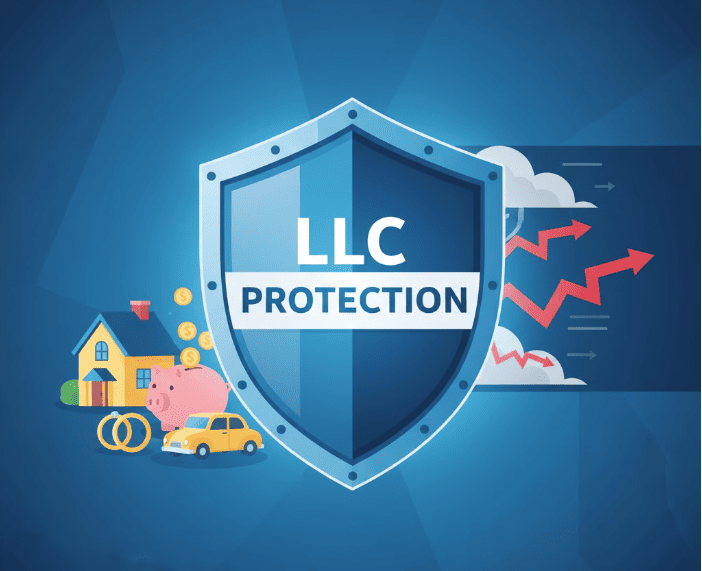
LLCs shield your personal assets from company debts and lawsuits. At the same time, they allow profits to pass directly to owners without double taxation.
Key Advantages
- Combines liability protection with simple tax filing.
- Avoids corporate taxes; profits flow to personal returns.
- Offers credibility when dealing with banks or investors.
- Allows flexible ownership and management structure.
Unlike corporations, LLCs don’t require strict meetings or heavy reporting. They’re great for small to mid-size businesses wanting freedom with protection.
You can start as a one-person LLC and later add partners or investors. It’s a structure that grows smoothly with your ambitions.
Corporation (C-Corp or S-Corp)
Corporations are the powerhouse structures for businesses that want to scale fast. They create a separate legal entity, meaning the company stands on its own. It provides the strongest liability protection for owners and investors.
Key Points
- A corporation is legally distinct from its founders.
- It can issue shares and attract external investors easily.
- C-Corps face double taxation; profits and dividends are both taxed.
- S-Corps avoid double taxation but limit the number of shareholders.
Corporations come with more rules, reports, and formalities. However, they’re ideal for startups planning to raise venture capital or go public.
Investors prefer corporations because they offer transparent ownership structures. If your long-term plan includes scaling globally or seeking big funding, a corporation might be the best fit.

Compare Before You Decide
Now that you’ve seen each structure, it’s time to compare them. Think of this step as balancing simplicity, protection, and growth potential. The right choice depends on how you plan to operate and scale.
| Structure | Liability Protection | Taxation | Complexity | Best For |
| Sole Proprietorship | None | Personal income | Low | Solo businesses |
| Partnership | Shared | Personal income | Low | Multiple founders |
| LLC | Limited | Pass-through | Moderate | Small to mid startups |
| C-Corp | Strong | Double taxation | High | Scalable, investor-backed startups |
| S-Corp | Strong | Pass-through | High | Profitable, mid-size businesses |
Tips Before Choosing
- Compare based on business size, funding goals, and management style.
- Don’t just pick what’s easy; pick what supports your long-term vision.
- Consider liability, taxes, and future investor expectations before filing.
The best structure isn’t always the simplest; it’s the most strategic.
Legal and Tax Considerations
Choosing your structure is also a legal and financial decision. Before registering, get advice from a professional who understands business law. It’s better to spend an hour with an expert than fix costly mistakes later.
Important Steps
- Consult a business attorney or licensed tax advisor.
- Register your business with the appropriate state agency.
- Apply for an Employer Identification Number (EIN) through the IRS.
- Check local business permits and industry-specific regulations.
Taxes, licenses, and compliance rules vary from state to state. Professionals can help ensure your structure meets both federal and local laws.
Think of this stage as building a solid foundation, which is one that keeps you compliant and confident.

Review and Adapt as You Grow
Your first structure doesn’t have to be your last. As your startup grows, your needs, goals, and team will change. It’s normal to review and restructure once you hit new milestones.
Tips:
- Reevaluate your structure every year or after major business changes.
- Convert to a corporation when you’re ready for investors or scaling.
- Simplify again if operations shrink or goals shift.
Many founders start as LLCs, then upgrade to C-Corps when investors come in. Others downsize from corporations back to LLCs to reduce paperwork.
The best founders treat structure as a living part of their business strategy. Stay flexible; what fits today might not fit tomorrow.

Conclusion
Choosing the right business structure is one of the smartest first steps you can take. It affects your taxes, protects your assets, and builds long-term stability.
A well-chosen structure gives you credibility and keeps your operations legally sound. Take time to understand each option, weigh your goals, and seek expert advice.
Your structure should serve your business, not limit it. Plan carefully, register properly, and review regularly as you grow.
The right structure doesn’t just protect your business; it helps it thrive. When your foundation is strong, every next step becomes easier.