

This article is for those business leaders facing that exact confusion. It is not about choosing humans or machines. It is about learning how both can work together intelligently.
A strong business needs human creativity and AI efficiency. Removing either creates an imbalance and risk. The goal is to design systems where people lead, and technology supports.
Throughout this guide, you will see practical examples and clear frameworks. You will learn where AI excels and where humans must remain central.
You will also learn how to avoid costly mistakesthat many businesses make early. Think of this article as a compass, not a rulebook. It will help you make informed decisions with confidence.

Why This Topic Is More Relevant Than Ever
AI adoption is no longer a future concept. It is happening right now across nearly every industry. Marketing, product design, finance, operations, and customer support are transforming fast.
AI adoption is accelerating rapidly
- New tools launch weekly with lower barriers to entry
- Costs are decreasing while capabilities keep expanding
- Small businesses now access tools once limited to enterprises
This acceleration creates excitement and anxiety simultaneously. Executives see efficiency gains and scalability opportunities. Employees worry about relevance, creativity, and job security.
Fear and excitement coexist inside organizations
Many teams feel pulled in opposite directions. One side pushes aggressive automation to stay competitive. The other side fears losing human judgment and originality.
The problem is not AI itself. The problem is unintentional adoption without clear boundaries.
The goal is balance, not replacement
Successful businesses do not automate blindly. They decide intentionally where machines help and where humans lead. They protect creativity while improving operational speed.
This article exists to support that balance. It avoids hype and avoids fear-driven narratives. Instead, it focuses on practical decisions leaders face daily.
Takeaway:
Intentional AI decisions create clarity, confidence, and long-term resilience.

What AI Does Exceptionally Well and Where Humans Still Lead
Confusion often arises when the roles between humans and AI blur. Clarity begins by understanding strengths on both sides.
Where AI performs exceptionally well
AI thrives in structured, repeatable environments. It excels at processing large volumes quickly.
AI strengths include:
- Speed in generating outputs and analyzing data
- Pattern recognition across massive datasets
- Scale without fatigue or emotional variation
- Consistency across repetitive tasks
AI does not get tired or distracted. It applies the same logic every time. This makes it powerful for operational efficiency.
Where humans still clearly lead
Humans operate differently from machines. They interpret meaning, emotion, and nuance instinctively.
Human strengths include:
- Creativity rooted in lived experience
- Judgment shaped by ethics and consequences
- Emotional intelligence in communication and leadership
- Contextual thinking across culture and timing
Creativity is not just about producing output. It is connecting ideas in unexpected ways. AI can remix information. Humans create meaning from it.
Why does unmanaged overlap create confusion
Problems arise when responsibilities overlap without clarity. Teams expect AI to think strategically. Humans defer judgment unnecessarily to automation.
Takeaway:
Clear role separation prevents confusion and strengthens collaboration.

Where Businesses Go Wrong When Adopting AI Too Fast
Speed without strategy creates hidden risks. Many organizations repeat the same adoption mistakes.
Common mistakes driven by hype
- Automating processes that are already broken
- Removing human oversight too early
- Expecting AI to replace strategic thinking
- Chasing tools instead of solving real problems
Automation amplifies whatever already exists. If workflows are inefficient, AI scales inefficiency faster.
Automating broken processes
Many teams skip process evaluation. They automate chaos instead of fixing it. This increases errors rather than reducing them.
Removing human oversight
Some businesses trust AI outputs blindly. They remove review layers to save time. It leads to brand damage and decision errors.
Expecting AI to replace strategy
AI supports strategy but does not define it. Strategic thinking requires context, risk assessment, and values.
A short scenario
A company automates customer responses completely. Tone becomes inconsistent and emotionally disconnected. Customer trust drops within weeks. The brand suffers despite faster response times.
Takeaway:
Speed without intention creates risk, not advantage.

Why Creativity Cannot Be Automated the Way Tasks Can
Creativity is often misunderstood by businesses. It is treated like output instead of a process.
Creativity is a thinking journey
True creativity involves exploration and judgment. It includes false starts, intuition, and refinement. AI can assist stages but does not own the process.
What AI struggles to replicate
- Original insight rooted in lived experience
- Cultural nuance across audiences and regions
- Ethical judgment in ambiguous situations
- Meaning creation beyond pattern recombination
AI generates based on existing data. Creativity often requires breaking from existing patterns.
Real business examples
Brands that stand out take creative risks. They respond to culture, timing, and emotion. AI supports research and drafts. Humans decide what feels right.
Creativity drives differentiation
Markets reward originality, not efficiency alone. Automation improves operations. Creativity builds emotional connection and loyalty.
Takeaway:
Human creativity remains the core source of differentiation.

The Role AI Should Play Inside Creative Workflows
AI works best as a collaborator. It should support, not decide.
AI as an assistant, not a decision-maker
AI accelerates early-stage thinking. Humans guide direction and final judgment.
Effective AI use cases
- Research and background summaries
- First drafts and variations
- Data analysis and performance insights
- Ideation support during brainstorming
Where human review remains critical
- Brand voice and tone decisions
- Ethical implications
- Strategic alignment
- Emotional resonance
A simple workflow model
- AI generates options quickly
- Humans refine, evaluate, and choose
- Final decisions remain human-led
Pro Tip: Human checkpoints
Always define review points where humans approve outputs. Never remove judgment layers entirely. This creates speed without sacrificing quality. It also builds trust inside teams.
Takeaway:
AI accelerates creativity when humans remain firmly in control.

How Leadership Mindset Shapes Successful AI Integration
Technology adoption never starts with tools. It always starts with leadership beliefs and assumptions. How leaders think about AI shapes how teams experience it.
Fear-driven adoption vs strategy-driven adoption
Some leaders adopt AI out of fear. They fear competitors moving faster. They fear rising costs and shrinking margins. They fear being left behind.
Fear-driven adoption usually looks rushed. Tools are introduced without explanation. Expectations are unclear. Teams feel threatened rather than supported.
Strategy-driven adoption looks very different. Leaders ask why before asking how. They identify problems first, not tools. They involve teams early in discussions.
The difference shows up in outcomes quickly.
Leadership beliefs become organizational behavior
Teams mirror leadership behavior. If leaders treat AI as a replacement, fear spreads. If leaders treat AI as an augmentation, curiosity grows.
Employees pay attention to subtle signals. Who gets praised matters. Who gets replaced matters. What tasks are automated matters.
When leadership communicates clearly, uncertainty reduces. When leadership stays silent, rumors fill the gap.
AI success depends more on trust than technology.
Transparency builds confidence and adoption
Clear communication reduces resistance. Teams want to know three things:
- Why AI is being introduced
- How will it affect their roles
- Where human judgment still matters
Leaders should explain goals openly. They should share limitations honestly. They should acknowledge fears without dismissing them.
“AI will support your work, not erase your value.” That message changes everything.
Encouraging experimentation without punishment
Fear kills learning. Teams avoid experimentation when mistakes are punished. Leaders must normalize testing. They must accept imperfect early results.
They must protect teams during learning phases. Safe experimentation leads to better systems. Punitive cultures lead to hidden failures.
Takeaway:
Leadership mindset determines whether AI becomes a lever or a liability.

Practical Ways Teams Can Collaborate With AI Instead of Competing With It
Collaboration begins when roles are clear. Competition begins when roles are threatened. Businesses must design collaboration intentionally.
AI for first drafts, humans for refinement
AI excels at starting points. It removes blank page friction. It generates multiple variations quickly. Humans refine tone, meaning, and direction.
They shape narrative and emotional flow. They decide what aligns with brand values. This division increases speed and quality together.
AI for analysis, humans for storytelling
AI processes numbers efficiently. It finds trends and anomalies fast. Humans translate data into stories. They explain why results matter.
They connect insights to real people. Data without a narrative lacks impact. Narrative without data lacks credibility.
The combination creates clarity.
AI for efficiency, humans for creativity
AI removes repetitive effort. Humans reinvest saved time into thinking.
Examples include:
- AI summarizing research
- Humans developing insights
- AI generating variations
- Humans selecting direction
Time saved must be protected intentionally. Otherwise, efficiency disappears into more work.
Encouraging experimentation with guardrails
Unrestricted experimentation creates chaos. Over-restriction kills learning.
Smart guardrails include:
- Clear use cases
- Defined approval steps
- Ethical boundaries
- Review checkpoints
Teams need freedom within structure. That balance produces sustainable innovation.
Takeaway:
Collaboration beats competition when roles are designed intentionally.

Skills Businesses Should Develop in the AI Era
The AI era does not eliminate skills. It reshapes which skills matter most.
Skill evolution, not job elimination
Jobs change before they disappear. Roles evolve before they vanish. Businesses that invest in skill development adapt faster. Businesses that ignore skills fall behind quietly.
Critical thinking becomes more valuable
AI produces outputs easily. Humans must evaluate quality and relevance.
Critical thinking includes:
- Questioning assumptions
- Spotting flawed logic
- Understanding consequences
- Making informed decisions
Blind trust in AI creates risk. Informed skepticism creates strength.
Prompt literacy becomes essential
Prompting is not technical wizardry. It is structured communication.
Good prompts require:
- Clear intent
- Context awareness
- Desired outcomes
- Constraints and tone
Teams that prompt well get better results. Teams that prompt poorly blame the tool.
Creative direction remains human-led
AI can generate content. Humans decide direction and meaning.
Creative direction includes:
- Brand voice alignment
- Emotional tone
- Strategic messaging
- Cultural sensitivity
This skill cannot be outsourced to automation.
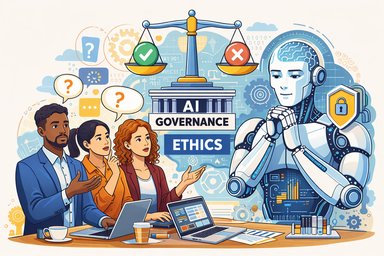
Ethical reasoning gains importance
AI decisions affect real people. Ethics guide responsible use.
Businesses must ask:
- Should we automate this
- Who is impacted
- Who is accountable
Takeaway:
Future-ready businesses invest in thinking, not just tools.
Ethical Boundaries Businesses Must Define Early
Ethics cannot be added later. They must be built from the beginning.
Risks of unchecked automation
Unchecked automation creates silent harm. Bias can scale faster than fairness. Errors can multiply unnoticed.
Common risks include:
- Biased decision-making
- Loss of accountability
- Over-reliance on automated outputs
- Reduced transparency
Efficiency without ethics damages trust.
Bias and misuse risks
AI reflects training data. Biased data produces biased outputs. Without oversight, harm compounds quietly.
Customers notice eventually. Reputation damage follows quickly. Ethics protect both people and brands.
Defining accountability clearly
Someone must make their own decisions. AI cannot be accountable. Leadership must remain responsible.
Clear accountability includes:
- Defined review roles
- Escalation paths
- Documentation of decisions
When things go wrong, clarity matters.
Ethical guidelines and review processes
Guidelines provide consistency. Review processes provide safety.
Effective ethics frameworks include:
- Usage policies
- Human review requirements
- Regular audits
- Continuous improvement
Takeaway:
Ethical clarity builds long-term trust and resilience.
What the Future Looks Like for Human-Centered AI Businesses
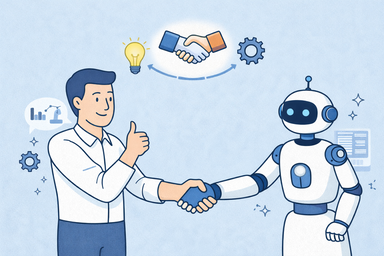
The future is not fully automated. It is intentionally augmented.
Balance defines competitive advantage
Speed alone is not enough. Creativity alone is not enough. Businesses that balance both win. They move fast without losing their soul. They scale without losing identity.
Adaptability matters more than perfection
No system will be perfect. Markets change constantly. Technology evolves rapidly. Adaptable businesses learn continuously. They refine systems regularly. They listen to teams and customers.
Human creativity remains irreplaceable
Creativity creates meaning. Meaning builds connection. Connection builds loyalty. AI supports creativity. It does not replace it. The strongest brands will remain human-led.
Takeaway:
The future belongs to businesses that amplify humanity through technology.
Conclusion
Balancing human creativity with AI automation is no longer optional. It is a strategic necessity for modern businesses.
Clear vision, intentional design, and ethical leadership matter more than tools. AI delivers speed and scale. Humans deliver meaning, judgment, and creativity.
When used together, they create sustainable advantages. When misused, they create confusion and risk.
Start small. Define boundaries early. Invest in people alongside technology. The businesses that win will not replace humans. They will empower them.