
For many modern entrepreneurs, digital products have become the smarter choice. They require less money upfront, scale faster, and often bring more freedom.
In this guide, we will explore why selling digital products can outshine physical ones in today’s diverse economy.
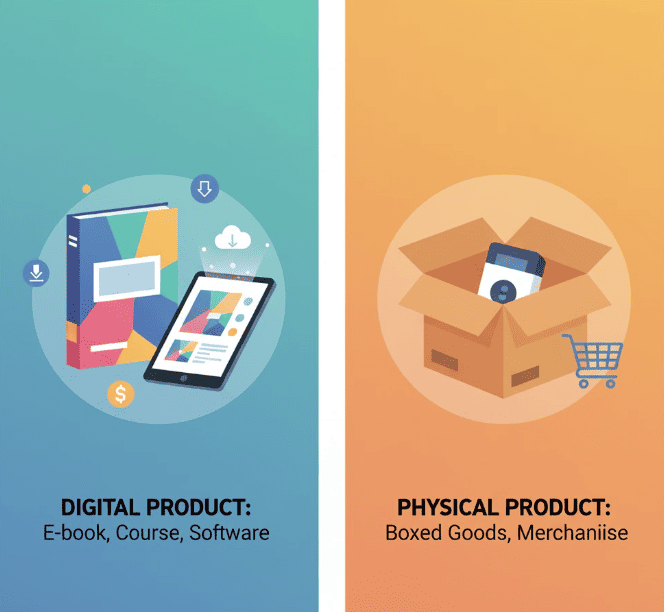
Low Startup Costs
Starting a digital product business is affordable for almost anyone. Unlike physical goods, you don’t need raw materials, warehouses, or factory equipment.
Most of the tools you’ll use are digital, and many are free or low-cost. Let’s compare the two models side by side:
| Aspect | Digital Products | Physical Products |
| Startup Cost | Very low; mainly software or creative tools | High production, packaging, and logistics |
| Inventory | None required | Must maintain stock levels |
| Storage | Cloud or drive storage | Requires physical space |
| Manufacturing | One-time digital creation | Ongoing production needed |
| Delivery Cost | None; instant download | Requires shipping and handling fees |
With digital products, you create something once and sell it repeatedly. Your main costs come from creation tools and marketing platforms.
Examples:
- An eBook made with Google Docs and Canva.
- An online course recorded using Zoom and uploaded to Teachable.
- A template designed in Notion, PowerPoint, or Figma.
- A software tool built using low-code platforms like Glide or Bubble.
Meanwhile, physical products involve multiple layers of spending: raw materials, packaging, quality checks, shipping fees, and returns.
Even small eCommerce shops face steep upfront costs before their first sale. Digital creators can bypass all of that and launch within days, not months.
That’s why so many new entrepreneurs start online businesses with digital products.
Easy and Fast Delivery
Speed matters in online business, and nothing delivers faster than digital products. Once a customer pays, they receive instant access; no shipping delays, no waiting.
Why Instant Delivery Wins
Modern consumers expect convenience. They’re used to streaming movies, downloading apps, and getting results now. When they buy your eBook or course, they want it immediately.
Digital products meet that expectation perfectly. Delivery happens through a simple download link or email. You don’t have to print, package, or ship anything yourself.
In contrast, physical product delivery involves:
- Packaging and labeling each item.
- Dealing with courier services and delivery times.
- Handling customer complaints or return requests.
Every extra step adds time, cost, and complexity.
Example of the Digital Advantage
Let’s say you sell a $20 digital planner. Customers buy it from your website and receive the file instantly. Now imagine selling a $20 physical notebook instead.
You must print it, store it, pack it, and ship it every time someone orders. One model scales effortlessly. The other eats up time and profit with every sale.
Instant delivery doesn’t just save effort; it also improves customer satisfaction. People love receiving what they paid for immediately, especially in the digital age.
Scalability and Global Reach
One of the biggest advantages of digital products is their unlimited scalability. You can sell the same file to 10 people or 10,000 people without extra work.
Unlimited Growth Potential
Physical businesses grow linearly; more sales require more production. Digital businesses grow exponentially; your creation process happens once.
| Factor | Digital Products | Physical Products |
| Production | One-time effort | Repeated for every unit |
| Scaling Cost | Almost zero | Increases with volume |
| Delivery Time | Instant and automated | Slower, depends on logistics |
| Reach | Global and unlimited | Restricted by location |
If you sell handmade candles, you must make and ship each one. If you sell a digital guide, you upload it once and sell it forever.
Go Global Without Barriers
Digital products remove geographical limits completely. Anyone with an internet connection can become your customer.
For instance:
- A U.S. creator can sell templates to buyers in Japan or Germany.
- A coach can sell an online course worldwide through platforms like Thinkific or Kajabi.
- A musician can sell sound packs to producers across continents instantly.
You don’t need warehouses, international shipping deals, or customs paperwork. A single website and payment processor can power your global reach.
Pro Tip:
Use payment systems like PayPal, Stripe, or Lemon Squeezy to accept global payments. Scalability isn’t just a bonus; it’s the foundation of digital business freedom.

Passive Income Potential
Digital products can earn money even while you sleep. Once you’ve built and uploaded your product, it can sell automatically. That’s the essence of passive income; earning repeatedly from one-time work.
How Passive Income Works
You create once. You market it once. Then, automation tools handle the rest: sales, delivery, and customer communication.
Example:
A designer creates a set of resume templates. They upload it to Etsy and promote it on Pinterest. Months later, sales keep rolling in without additional effort.
Physical businesses rarely allow that level of automation. You must restock inventory, pack items, or handle shipping daily.
Digital Tools That Enable Passive Income
| Platform | Purpose |
| Gumroad | Sell downloads and memberships |
| Podia | Host online courses and digital bundles |
| Teachable | Deliver coaching programs and courses |
| Shopify | Automate digital product delivery |
| Notion Marketplaces | Sell templates or productivity tools |
With the right setup, you can sell 24/7 without touching a single file.
The Compounding Effect
Over time, one product becomes a library of assets. Each new release builds on your brand and adds another income stream.
The more products you create, the more your revenue grows passively. That’s the beauty of digital entrepreneurship; your effort multiplies rather than resets with every sale.
Easier to Test and Update
Market feedback can change fast. What worked last month might not resonate today. Luckily, digital products are flexible and easy to update.
Fast and Simple Adjustments
If a customer spots an error in your eBook, you can fix it in minutes and upload a new version.
If you run a course & want to add a bonus video, it takes a few clicks to add it to your platform.

Compare that to physical products; a single design change might require reprinting, repackaging, or restocking. That means extra time, extra cost, and potential waste.
Testing Becomes Effortless
Digital creators can also run quick experiments. You can test:
- Different prices to see what converts best.
- New product descriptions to boost engagement.
- Alternative designs or file formats for customer preference.
You can even offer beta versions to early adopters for feedback. Then improve before launching officially. That kind of flexibility simply doesn’t exist with physical inventory.
Example
A fitness coach launches a $29 digital meal plan PDF. After feedback, she adds a bonus recipe section and raises the price to $39.
Her existing buyers get free updates, and new customers see more value. This adaptability strengthens your brand and customer loyalty simultaneously.
Digital businesses grow by listening, improving, and relaunching.

Fewer Risks and Hassles
Physical product businesses carry plenty of risk: inventory loss, damage during shipping, or products going out of stock. Digital products eliminate almost all of these headaches.
Lower Risk Profile
| Risk Type | Physical Product Issue | Digital Product Advantage |
| Inventory Damage | Can be lost or broken | None; stored online |
| Shipping Problems | Delays, returns, lost parcels | Instant delivery |
| Storage Space | Needs warehouses or rooms | Cloud storage only |
| Cost Fluctuation | Material and shipping costs vary | Stable, predictable expenses |
| Customer Complaints | Often about physical defects | Easy digital fixes or replacements |
Digital creators don’t worry about warehouse floods or broken boxes. They don’t deal with refunding customers because a product arrived damaged. Fewer moving parts mean less stress and fewer operational surprises.
Simplified Business Operations
Without the logistics of shipping or supply chains, you can focus purely on creation and marketing.
Less maintenance, more creativity. That’s what keeps digital entrepreneurs agile and focused on growth.

Higher Profit Margins
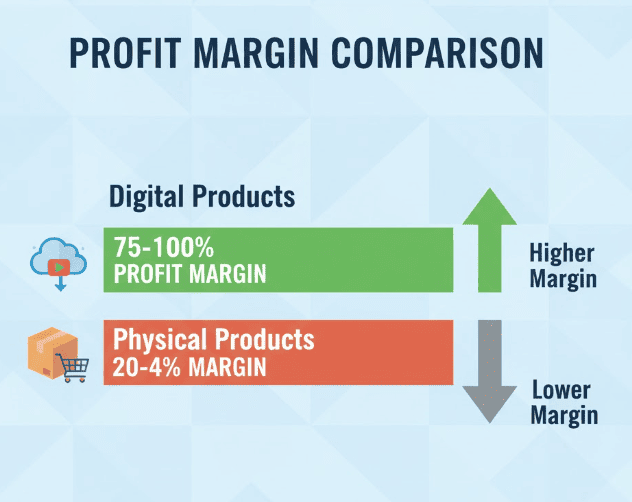
This is where digital products truly shine. Because there’s no manufacturing or shipping, most of your revenue becomes profit.
A physical business often spends up to 70% of its earnings on materials and logistics. Digital businesses spend maybe 10–20%, mostly on marketing and tools.
Profit Margin Comparison
| Business Type | Average Cost Percentage | Average Profit Margin |
| Physical Products | 60 to 80% of revenue | 20 to 40% profit margin |
| Digital Products | 10 to 20% of revenue | 80 to 90% profit margin |
You can also set dynamic pricing based on market demand. For example, you might sell your digital guide at $29 during launch, then raise it to $49 as you build testimonials and authority.
No reprinting. No new costs. Just more profit.
The Long-Term Advantage
Physical sellers often chase volume to grow profits. Digital sellers grow through value stacking, adding bonuses or bundles.
Example:
You start selling an online course for $99. Later, you add private coaching for $199 more. Your costs stay the same, but your earnings double.
High margins give you more room to reinvest in ads, content, or tools. That’s how digital entrepreneurs compound their success rapidly.
The Emotional and Creative Benefits
Beyond money and logistics, digital products offer freedom. You can build once, sell forever, and work from anywhere.
Creative Freedom
Digital creation lets you focus on ideas, design, and innovation. There’s no assembly line; just your creativity and digital tools.
Writers, designers, coaches, and developers all thrive in this environment. You can experiment with new formats without financial risk.
Lifestyle Flexibility
You can run your business entirely online, from a laptop or tablet. No office, no warehouse, no shipping deadlines.
That independence lets you travel, spend more time with family, or build multiple products at once. For many, that flexibility is the ultimate reward of digital entrepreneurship.
Hybrid Possibilities: Combining Physical and Digital
Some businesses blend both worlds successfully. For example, authors sell both eBooks and printed copies. Course creators sell physical workbooks alongside online programs.
The key is balance; using digital products for scalability, and physical ones for brand touchpoints or premium experiences.
Example Hybrid Models:
- A photography course + printed guidebook.
- A SaaS product + branded merchandise.
- An eBook + limited-edition hardcover copies.
This approach gives you multiple income streams and appeals to varied audiences.

Conclusion
The modern online business world offers endless opportunities. But one truth stands out; digital products deliver unmatched advantages.
Let’s recap the core benefits:
- Low Startup Costs:
You need little capital and no inventory to start. - Easy and Fast Delivery:
Instant downloads make customers happy and save time. - Scalability and Global Reach:
Sell worldwide without extra effort or expense. - Passive Income Potential:
Earn automatically long after the initial creation. - Easy to Update:
Improve products quickly without reprinting or reshipping. - Fewer Risks:
No lost stock, shipping issues, or production worries. - Higher Profit Margins:
Keep more revenue with minimal operating costs.
Each of these benefits strengthens your business and your peace of mind. You focus on creating and connecting, not packaging or logistics.
If you’re starting an online venture, consider going digital first. Build something once and sell it forever. Your time, energy, and creativity will multiply in value.
The future belongs to creators who work smarter, and digital products are the smartest way to grow a business that lasts.