

Most online businesses that fail do not collapse due to a single dramatic error. Instead, they struggle under the weight of small, avoidable mistakes made early on. These mistakes quietly compound over time, draining confidence, resources, and momentum.
This article focuses on the most common errors new online entrepreneurs make and explains how to avoid them before they cause lasting damage. The goal is not to discourage, but to replace unrealistic expectations with informed execution. When founders understand where others go wrong, they give themselves a far stronger chance of building something sustainable.

Why Do So Many Online Businesses Struggle in the First Year?
Online businesses are often marketed as simple and flexible. No office space. No inventory in many cases. No fixed working hours. While these advantages are real, they create a false sense of ease. Simplicity in structure does not mean simplicity in execution.
Behind every functioning online business are dozens of decisions related to positioning, messaging, systems, customer understanding, and consistency. New founders rarely see this complexity before they begin.
Expectations Versus Execution
One of the main reasons businesses struggle early is the gap between what people expect and what the process actually demands.
Common expectations include:
- Fast income once the product is launched
- Immediate audience growth after posting content
- Clear direction from the start
- Confidence increases as soon as action is taken
What usually happens instead:
- Income is inconsistent or nonexistent at first
- Content gets little to no engagement
- Direction changes multiple times
- Confidence fluctuates based on external feedback
When expectations are unrealistic, normal challenges feel like personal failure. This leads many founders to quit prematurely.
Failure Is Often Misdiagnosed
Most first-year struggles are not signs that the business idea is bad. There are signs that fundamentals were skipped or rushed.
Poor validation, weak customer understanding, inconsistent execution, and emotional decision-making all contribute to early stagnation.
The encouraging truth is that many of these issues are preventable once they are clearly understood.

The Danger of Treating an Idea as a Business Too Early
An idea can feel powerful, especially when it aligns with personal interests or experiences. This emotional connection often leads founders to assume that others will automatically see the same value.
Thoughts such as:
- Everyone needs this
- This is obviously useful
- I would pay for this myself
These assumptions feel logical, but they are not proof of demand.
Idea Versus Business
There is a critical distinction many beginners overlook.
| Idea | Business |
| Exists in the mind | Exists in the market |
| Based on assumptions | Based on transactions |
| Feels exciting | Produces feedback |
| Costs time | Generates or tests a value |
A business begins when someone else is willing to exchange money, time, or attention for what you offer.
How to Validate Before Building
Validation does not require a perfect product or a large audience. Small actions can reveal valuable insights.
Effective early validation methods:
- One-on-one conversations with potential customers
- Pre-selling a simple version of the offer
- Offering a service manually before automating it
- Posting content that directly addresses a specific problem and observing responses
The goal is not confirmation, but information. Validation often reveals flaws that make the idea stronger, not weaker.

Building the Product Before Understanding the Customer
Many founders begin with a solution in mind. A tool, a course, a platform, or a framework. They invest time refining features without deeply understanding who they are building for.
This leads to products that are technically impressive but poorly aligned with real needs.
Why Customer Research Is Avoided
Customer research is often skipped because it feels uncomfortable or slow. Talking to people introduces uncertainty. Founders fear hearing that their idea is confusing, unnecessary, or misdirected.
Yet avoiding these conversations guarantees a higher risk of failure.

What Understanding the Customer Really Means
Understanding your customer goes beyond demographics. It includes:
- Daily frustrations
- Language they naturally use
- What they have already tried
- What feels urgent versus optional
- Emotional drivers behind their decisions
A Common Product Market Misalignment Example
A founder builds an advanced planning system for freelancers. After launch, engagement is low. Through later conversations, they discover that most freelancers are not struggling with organization.
They are struggling with finding clients. The product solves a secondary problem, not the primary one. This misalignment could have been avoided with early conversations.
Practical Ways to Learn Before You Build
- Conduct informal interviews with no selling involved
- Observe online communities where your audience already speaks
- Ask open-ended questions instead of leading ones
- Listen more than you explain
Products built on understanding sell with far less resistance.
The Trap of Expecting Fast Results Without Consistent Effort
Stories of rapid success dominate online spaces because they are exciting. What is rarely shown is the time spent building skills, experimenting, and failing quietly before any visible results appeared.
When founders expect fast outcomes, slow progress feels like proof that something is wrong.
How Trust and Visibility Actually Develop
Trust is cumulative. People rarely buy after a single interaction. They observe consistency, clarity, and reliability over time.
Algorithms function similarly. They reward repeated, steady behavior, not short bursts of activity followed by long gaps.
Early Traction Is Often Invisible
In the beginning:
- Content might reach very few people
- Offers may receive no responses
- Feedback may be limited or unclear
This phase is not a signal to abandon the process. It is a signal to refine execution.
The Cost of Inconsistency
Switching strategies too quickly prevents learning. When nothing is tested long enough, nothing improves.
Consistency allows:
- Patterns to emerge
- Skills to compound
- Confidence to stabilize
Patience combined with disciplined effort produces results that urgency never can.

Trying to Do Everything Alone From Day One
In the early stages, many founders attempt to manage every role themselves. Strategy, marketing, design, operations, customer support, and administration all compete for attention.
This often leads to exhaustion rather than efficiency.
Common Roles New Founders Try to Handle Alone
- Content creation
- Technical setup
- Branding and design
- Sales and outreach
- Customer communication
- Financial tracking
While learning these skills has value, trying to master all of them at once spreads focus too thin.
The Difference Between Control and Focus
Doing everything alone feels like control, but it often results in shallow execution. Focus creates depth, and depth drives progress.
Smarter Use of Limited Resources
Founders do not need a full team immediately. Instead, they benefit from:
- Prioritizing high-impact tasks
- Simplifying workflows
- Using templates and existing tools
- Selectively outsourcing low-leverage work when possible
Long-Term Impact of Early Burnout
Burnout rarely appears suddenly. It builds through sustained overload. When energy declines, consistency breaks, and the business stalls.
Protecting focus and energy early is not a luxury. It is a strategic decision.

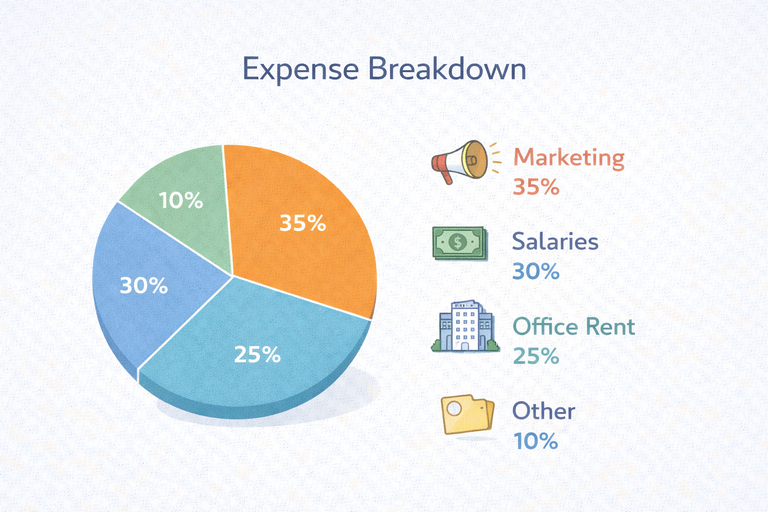
Spending Money in the Wrong Places Early On
In the early stages of an online business, spending money can feel like progress. Purchasing tools, software, branding packages, and advertising gives the illusion that the business is becoming more legitimate. Unfortunately, legitimacy does not equal viability.
Many founders spend before they understand what actually moves their business forward. This often leads to depleted budgets without meaningful traction.
Common Early Spending Mistakes
The following expenses are frequently prioritized too early:
- Premium software subscriptions that are only partially used
- Paid ads before messaging or offers are proven
- Expensive logos, websites, or brand identities
- Multiple overlapping tools that serve the same purpose
These purchases feel responsible, but they rarely solve foundational problems.
What Should Come First Instead
Early spending should support learning, clarity, and feedback.
High-value early investments include:
- Education that improves decision-making
- Tools that directly support execution, not appearance
- Experiments that test demand
- Systems that save time on repetitive tasks
A Simple Budgeting Discipline
| Question | Purpose |
| Does this expense directly support validation? | Avoid premature scaling |
| Can this be delayed without harm? | Preserve cash |
| Does it solve a current problem or a future one? | Stay focused |
| Will this still matter in six months? | Avoid impulse purchases |
Money should be used to amplify what already works, not to compensate for uncertainty.
Avoiding Marketing Because It Feels Uncomfortable
Many people start online businesses to avoid selling. They enjoy building, creating, or helping, but feel uneasy about visibility and self-promotion. This discomfort leads to avoidance, which quietly stalls growth.
Common fears include:
- Being judged publicly
- Sounding salesy or dishonest
- Rejection or negative feedback
- Feeling inexperienced or unqualified
These fears are human, but avoiding marketing does not remove the need for it.
Reframing Marketing as Communication
Marketing is not persuasion through pressure. It is clear communication of value.
At its core, marketing answers three questions:
- Who is this for?
- What problem does it solve?
- Why does it matter now?
When marketing is honest and helpful, it serves the audience rather than manipulates them.
Simple and Ethical Marketing Approaches
Marketing does not need to be complex or aggressive.
Effective beginner-friendly approaches include:
- Educational content that solves small problems
- Sharing personal lessons and insights
- Case studies and real examples
- Clear explanations of what you offer and why
Visibility is not ego; it is responsibility. If your work helps people, hiding it limits its impact.

Ignoring Systems and Processes Until Chaos Hits
In the beginning, everything feels manageable. Tasks are remembered mentally. Files are saved wherever convenient. Processes change daily. This informality feels flexible and efficient.
The problem appears when the volume increases.
What Happens Without Systems
Without basic systems, businesses experience:
- Repeated mistakes
- Lost information
- Slower execution
- Increased stress
- Reactive decision making
Chaos does not arrive suddenly. It builds quietly until productivity collapses.
Systems Do Not Have to Be Complex
Early systems should be simple and adaptable.
Examples of helpful early systems:
- A single place to track tasks
- A repeatable content creation workflow
- A basic customer onboarding checklist
- Standard responses for common questions
Benefits of Early Process Creation
- Reduced mental load
- Faster execution
- Easier delegation later
- More consistent outcomes
Systems do not limit creativity. They protect it.

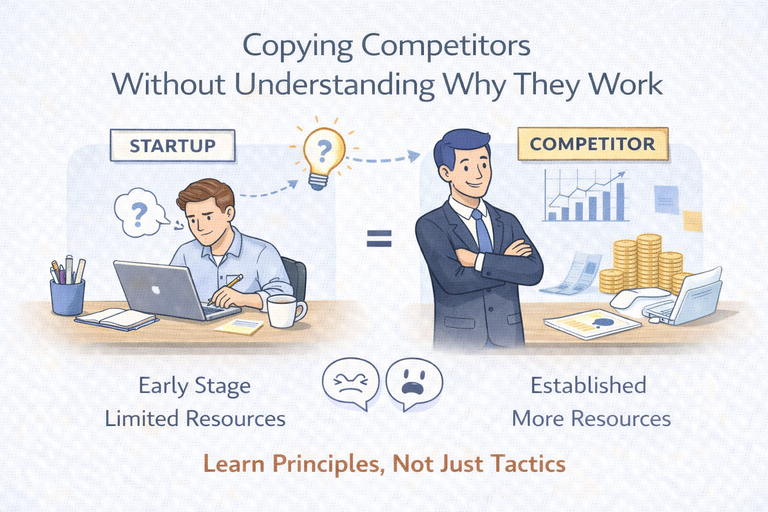
Copying Competitors Without Understanding Why They Work
Studying competitors is useful, but copying without context is risky. What works for someone else often depends on factors that are invisible to outsiders.
These factors include:
- Audience size and maturity
- Brand trust built over time
- Access to capital or a team
- Previous failures that shaped the current strategy
When founders imitate tactics without understanding these elements, disappointment follows.
Why Copying Feels Safe but Is Not
Copying removes the discomfort of decision-making. It feels safer to follow a proven path. However, without understanding the reasoning behind the strategy, execution lacks alignment.
Principles Versus Tactics
| Tactics | Principles |
| Specific actions | Underlying logic |
| Time sensitive | Timeless |
| Context dependent | Adaptable |
| Easy to copy | Harder to understand |
Instead of asking what others are doing, founders should ask why it works.
How to Learn From Competitors Effectively
- Analyze messaging rather than just formats
- Observe how trust is built over time
- Identify the core problem being addressed
- Adapt strategies to your current stage
Understanding principles leads to originality and resilience.
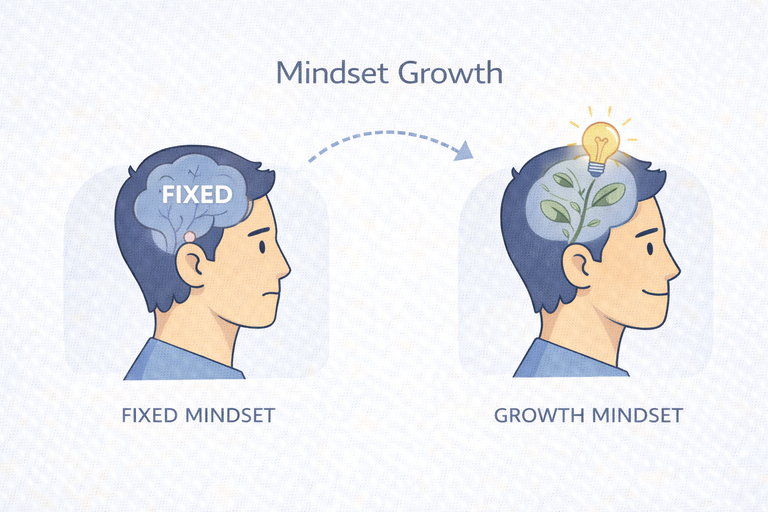
The Importance of Mindset and Discipline
Running an online business is emotionally demanding. Progress is uneven. Feedback is inconsistent. Wins and losses often feel personal.
Without emotional regulation, founders swing between extremes of optimism and discouragement.
Common Internal Challenges
- Self-doubt after slow periods
- Distraction caused by comparison
- Loss of motivation when results are delayed
- Inconsistency driven by mood
These challenges are not signs of weakness. They are part of the process.
Discipline Over Motivation
Motivation fluctuates. Discipline creates stability.
Discipline looks like:
- Showing up even when enthusiasm is low
- Following systems instead of impulses
- Making decisions based on long-term goals
- Reviewing progress honestly without judgment
Practices That Support Mental Stability
- Regular reflection on progress
- Clear boundaries around work time
- Reduced consumption of comparison-driven content
- Grounding routines that separate work from identity
A strong mindset does not eliminate difficulty. It allows you to move through it.
What Successful Online Businesses Do Differently Early On
Successful businesses are not defined by flawless execution. They are defined by intentional habits practiced early.
These founders:
- Validate before building extensively
- Listen closely to their audience
- Improve through iteration rather than perfection
- Focus on fundamentals before scaling
Key Early Habits of Strong Founders
- Testing ideas with minimal investment
- Collecting feedback continuously
- Building simple offers before complex ones
- Staying adaptable rather than attached
Progress Over Perfection
Perfection delays learning. Progress accelerates it. Successful founders accept that early versions will be imperfect.
They focus on making them useful rather than impressive. Mistakes are not avoided. They are integrated into better decisions.

How Avoiding These Mistakes Changes Long-Term Outcomes
Small choices made early shape the future of the business. Clear positioning reduces marketing friction. Early systems prevent later overwhelm. Validation saves time and money.
Reactive Versus Prepared Founders
| Reactive Founders | Prepared Founders |
| Constantly pivot | Adjust intentionally |
| Chase trends | Build foundations |
| Operate emotionally | Decide strategically |
| Burn out easily | Sustain effort |
Prepared founders are not luckier. They are more deliberate.
Sustainability Creates Confidence
When systems, mindset, and strategy align, confidence grows naturally. Decisions feel calmer. Progress feels intentional. The business becomes something that supports life rather than consumes it.

Conclusion
Starting an online business is not a shortcut to success. It is a process that requires patience, clarity, and consistent effort. The challenges involved are real, but they are not random. Most difficulties can be traced back to a small set of common mistakes made early on.
Avoid premature scaling, ground decisions in real customer understanding, approach marketing with honesty, and build simple systems from the beginning to increase chances of long term success. These actions do not guarantee quick results, but they create stability and direction.
Mistakes will still happen. Uncertainty will still exist. The difference is that intentional founders learn from these moments instead of being defined by them. They move forward with awareness rather than urgency.
An online business built with patience and discipline grows differently. It grows sustainably. And over time, that difference matters more than any short-term win.