
Best Tools for Creating Websites, Landing Pages, Courses, and Selling Digital Products
You’ve probably thought about this already. Build a website, create a simple page, maybe sell a course or digital product online without writing a single


This guide explains how small business loans work, the main types, how to qualify, and how to use them wisely.

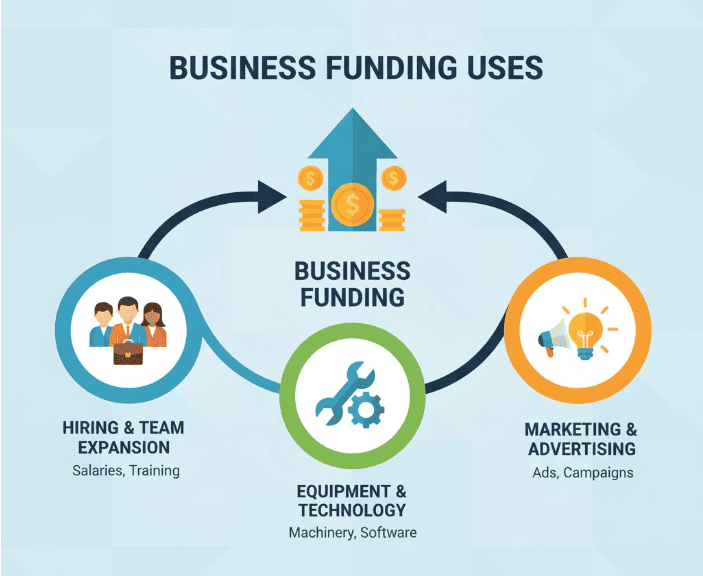
Every business reaches a point where cash alone isn’t enough. Funding helps turn ideas into action and growth into stability.
When used wisely, a loan becomes a tool for expansion, not a burden.
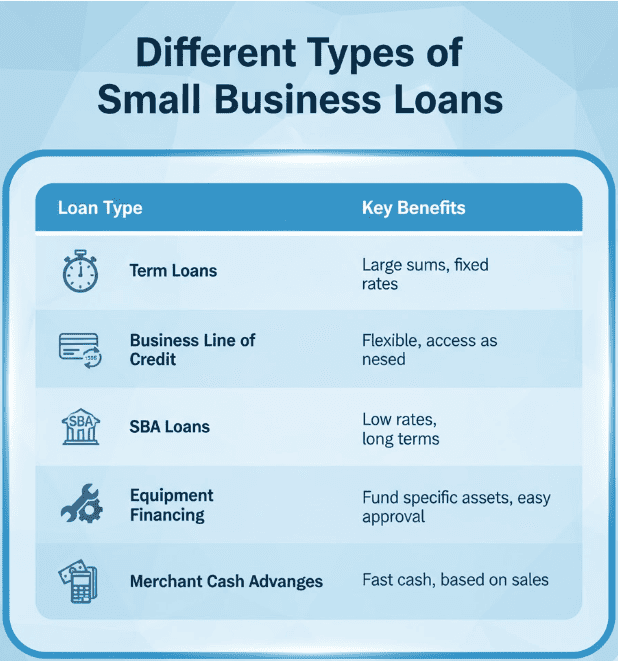
Choosing the right loan depends on what your business needs most.
You borrow a lump sum and repay with interest over time. Good for major investments like new equipment or property.
Access funds when needed and pay interest only on what you use. Useful for short-term gaps or unpredictable expenses.
Backed by the U.S. Small Business Administration. Offer lower rates and longer terms, but need strong documentation.
Specifically for buying tools or machinery. The equipment itself acts as collateral.
Quick funding based on future sales. Fast but expensive, best for emergencies.
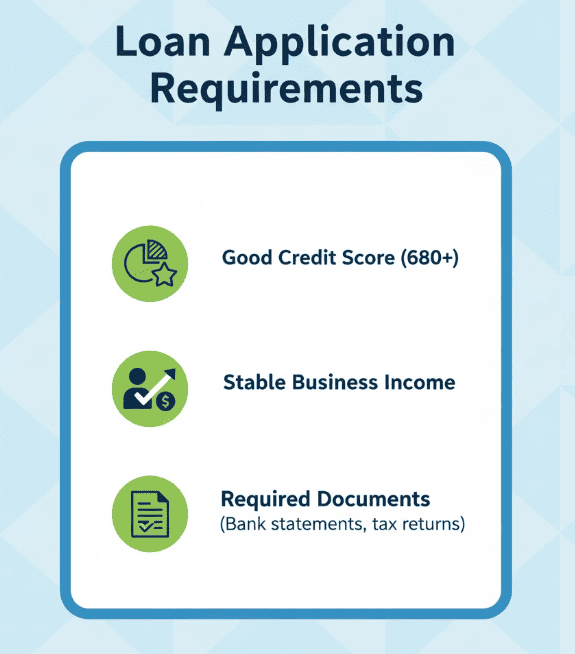
Lenders check several key factors before approving applications.
A solid business plan and reliable records increase your approval odds.
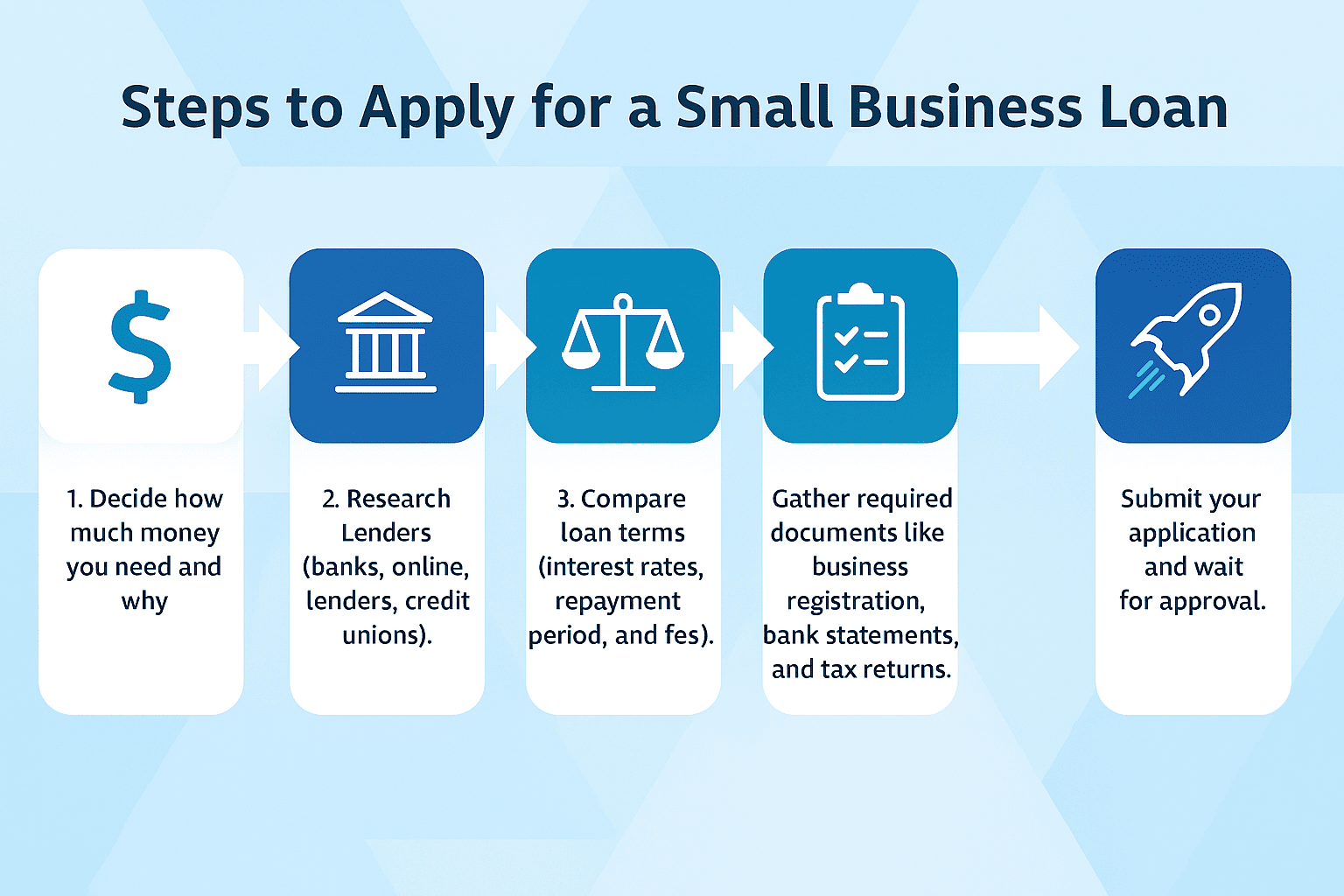
Applying for a loan can seem complicated, but the process is simple when broken down.
Here’s a clear step-by-step guide to help you get started.
Before applying, decide exactly why you need the funds. Are you expanding, hiring, or buying equipment? Estimate how much you’ll need; don’t borrow more than necessary.
Explore all available lenders:
Compare multiple sources to find the best fit for your business model.
Focus on these factors:
A slightly lower interest rate can save thousands over the loan term.
Commonly required documents include:
Having everything ready speeds up approval and shows professionalism.
Once submitted, lenders will review your credit, financials, and eligibility. Some online lenders respond within 24 hours, while banks might take several days or weeks.
If approved, review the agreement carefully before signing. Understand repayment schedules, fees, and your total loan cost.
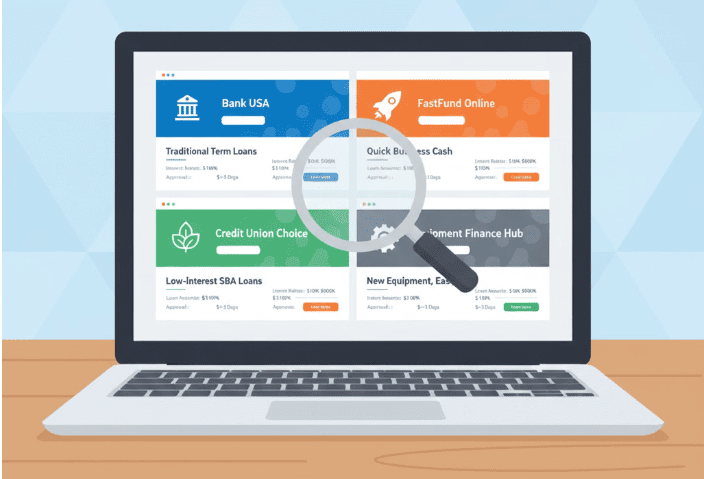
Different lenders suit different business stages.
Lender Type | Best For | Key Benefit |
Traditional Banks | Established businesses | Lower interest rates |
Online Lenders | New or small firms | Faster approvals |
Credit Unions | Local entrepreneurs | Personalized support |
Marketplaces | All types | Compare offers easily |
Always verify licenses, read customer reviews, and check transparency before committing.
Securing a loan is only half the job; managing it smartly matters even more. How you use the funds determines whether your loan becomes an asset or a liability.
Allocate money to areas that boost productivity or sales. Examples include:
Maintain a separate account for loan funds. This makes it easier to track spending and ensure accountability. Regularly review cash flow reports to monitor how funds affect growth.
Don’t use borrowed money for vanity projects or unproductive costs. Focus on activities that create measurable returns.
As the loan boosts revenue, reinvest some profits to grow further. That helps build momentum while keeping your repayment schedule comfortable. Using funds with discipline ensures your loan creates value, not debt pressure.
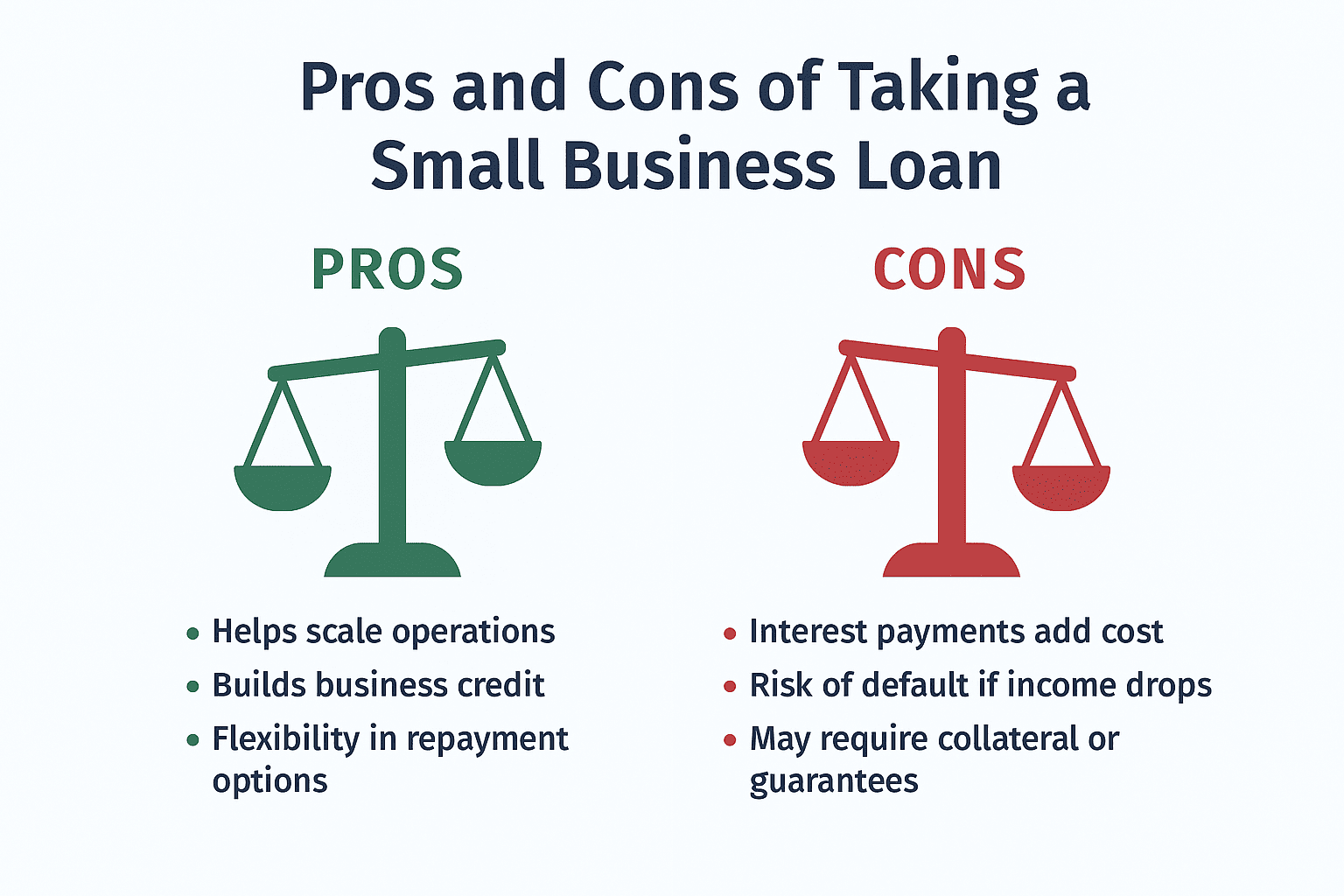
Pros | Cons |
Boosts business growth | Adds debt burden |
Builds a credit profile | Interest increases cost |
Flexible repayment options | Risk of default |
Improves cash flow | May need collateral |
If a traditional loan doesn’t fit your situation, several modern funding options can still help your business grow.
Platforms like Kickstarter and Indiegogo let you raise money directly from supporters. You present your business idea, and backers contribute small amounts collectively. It’s great for startups with innovative products or strong community appeal.
If your business shows high growth potential, investors may provide equity funding. You don’t repay like a loan, but you share ownership and decision-making.
Government and private grants offer funding without repayment. However, competition is tough, and strict eligibility rules apply. Grants are ideal for research, innovation, or community-impact businesses.
These offer short-term funding for smaller expenses. They’re convenient but carry higher interest rates if balances aren’t paid quickly.
P2P platforms connect you directly with individual lenders online. Rates and terms vary, but can be more flexible than banks.
Each alternative has unique pros and risks. Choose based on your business size, growth stage, and tolerance for debt.

A small business loan can be the bridge between where you are and where you want your business to go. Used wisely, it’s not just borrowed money; it’s a growth strategy.
It can help you expand operations, upgrade technology, or build a stronger workforce. But every loan comes with responsibility.
Before borrowing, assess your repayment ability and choose lenders who understand your goals. Compare offers, read terms carefully, and never rush the decision.
With thoughtful planning, a small business loan can turn financial pressure into opportunity. It provides the flexibility to invest, grow, and compete with confidence in any market.
In the end, it’s not about the amount you borrow; it’s about how effectively you use it to strengthen your future.

You’ve probably thought about this already. Build a website, create a simple page, maybe sell a course or digital product online without writing a single

Most business owners look at their profit and loss statement only when tax season rolls around or when their accountant asks for it. I understand
If you run a business, people will look you up. They do it before they call. They do it before they buy. They do it